In many professional workplaces, overt sexism has become far less visible than it once was. Clear policies, training and increased awareness mean most people understand what behaviour could lead to complaints or disciplinary action.
But that does not mean sexism has disappeared.
In many organisations it has simply become more subtle.
Rather than appearing through obvious misconduct, it often shows up in everyday decisions about credibility, leadership potential and influence. These moments rarely involve clear rule breaking, yet over time they can shape how individuals experience work and how opportunities are distributed.
It is also important to recognise that experiences of sexism are not uniform. Gender often intersects with other aspects of identity such as race, disability, age or sexuality. These overlapping dynamics can shape how individuals experience bias and how seriously their concerns are taken.
Understanding how subtle sexism presents helps organisations recognise patterns earlier and respond more thoughtfully.
When sexism becomes less visible but still influential
Over the past decade, workplace expectations around behaviour have evolved significantly. Many employees are now aware of what constitutes overt harassment or inappropriate conduct.
As a result, sexism in professional environments often appears less obvious than it once did.
Instead of explicit comments or behaviour, it may show up in quieter ways that influence how individuals are perceived and treated.
For example:
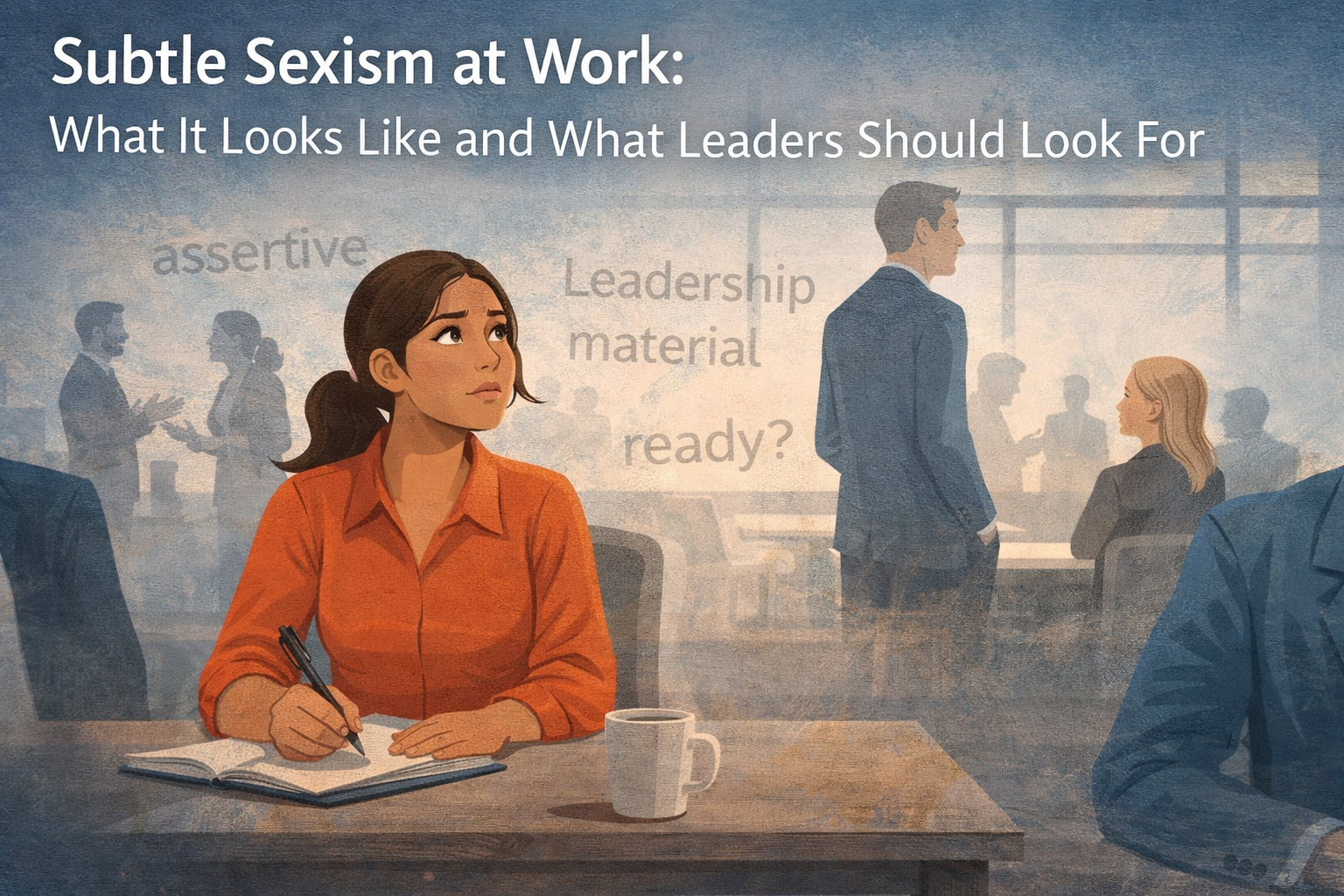
• assumptions about who is “ready” for leadership roles
• different interpretations of assertiveness in men and women
• informal networks influencing visibility and opportunity
• women being expected to adopt particular communication styles to be perceived as effective
These patterns are rarely deliberate. In many cases they reflect long standing cultural expectations about leadership, authority and confidence.
Because the behaviour appears subtle or ambiguous, it can be difficult for individuals to challenge in the moment. Over time, however, these small dynamics can shape how inclusive a workplace truly feels.
The importance of recognising intersectional experiences
Conversations about sexism can sometimes unintentionally treat women as a single group with shared experiences. In reality, workplace experiences can vary significantly depending on how gender intersects with other aspects of identity.
For example, women of colour, disabled women or LGBTQ+ women may encounter different or compounded forms of bias. The expectations, stereotypes or assumptions they encounter can differ from those experienced by others.
Intersectionality is an important concept within discussions about equality. Coined by legal scholar Kimberlé Crenshaw, the term describes how overlapping identities can shape the way individuals experience discrimination or disadvantage.
In workplace settings this may influence:
• how credibility is assessed
• whose voices are heard in meetings
• whose behaviour is perceived as “professional”
• how seriously concerns are taken when they are raised
Recognising intersectional dynamics helps organisations avoid oversimplifying complex experiences and ensures responses are thoughtful and inclusive.
When reputation overrides evidence
Another dynamic HR professionals often encounter is the influence of reputation.
Individuals who are seen as high performers, strong leaders or commercially important to the organisation often benefit from significant credibility. While reputation can be well earned, it can also shape how concerns about behaviour are interpreted.
When concerns arise, leaders sometimes respond instinctively based on their experience of the individual involved.
Comments such as:
• “That does not sound like them.”
• “They are one of our strongest leaders.”
• “I have worked with them for years and never seen that behaviour.”
These reactions are understandable. People naturally rely on past experience when forming views about colleagues.
However, reputation is not evidence.
Different employees can experience the same individual very differently depending on hierarchy, context and power dynamics. Focusing on evidence rather than perception helps ensure concerns are assessed fairly.
When commercial value shapes accountability
In some situations another dynamic emerges alongside reputation: commercial value.
Organisations sometimes face an uncomfortable question when concerns are raised.
How valuable is the individual involved compared with the person raising the concern?
Where someone is viewed as a key revenue generator, senior leader or high performer, there can be pressure to minimise disruption or protect the individual.
These pressures may not always be explicit, but employees often notice when they exist.
If people believe behaviour will be overlooked because someone is commercially important, confidence in organisational fairness quickly erodes.
Consistency of standards therefore becomes critical. Employees pay close attention to whether expectations about behaviour apply equally across levels of seniority and influence.
How subtle sexism influences speaking up
Subtle sexism can also influence whether employees feel comfortable raising concerns in the first place.
Employees often assess how organisations respond when issues arise involving influential individuals.
They notice signals such as:
• whether concerns are taken seriously
• whether investigations are conducted fairly
• whether leaders appear defensive when behaviour is questioned
• whether accountability applies consistently
These signals shape whether employees believe raising concerns will lead to meaningful action.
Where trust exists, issues tend to surface earlier and can often be addressed constructively. Where trust is lacking, concerns may remain unspoken until they escalate into more serious disputes.
You can read more about how organisations examine concerns about behaviour in our guide to Disciplinary Investigations, which explains the typical process organisations follow when allegations are formally investigated.
Subtle sexism rarely appears as obvious misconduct, which can make it harder to recognise. However, leaders and HR teams can take practical steps to identify and address these dynamics.
Look for patterns
Subtle bias often becomes visible when looking at patterns across teams, promotions, leadership pipelines and decision making.
Avoid relying solely on reputation
Positive perceptions of colleagues should not determine whether concerns are taken seriously. Focus on evidence rather than assumptions.
Recognise intersectional experiences
Different employees may experience workplace culture in different ways depending on their identities and positions within organisational hierarchies.
Be conscious of power dynamics
Employees may hesitate to raise concerns about individuals who hold influence or authority. Fair and consistent processes help build trust.
Respond with curiosity
Early reactions to concerns matter. Listening carefully and avoiding defensiveness helps create environments where employees feel safe speaking up.
Organisations that approach these dynamics thoughtfully create cultures where fairness, respect and accountability are visible.
Subtle sexism is often harder to identify than overt misconduct, yet it can still shape workplace culture in meaningful ways. Recognising how bias, reputation and power interact helps organisations respond more thoughtfully when concerns arise.
At Tell Jane we support organisations to navigate complex workplace issues and conduct fair, independent investigations when behaviour is questioned. Building environments where concerns can be raised and addressed constructively helps create workplaces where people feel respected.