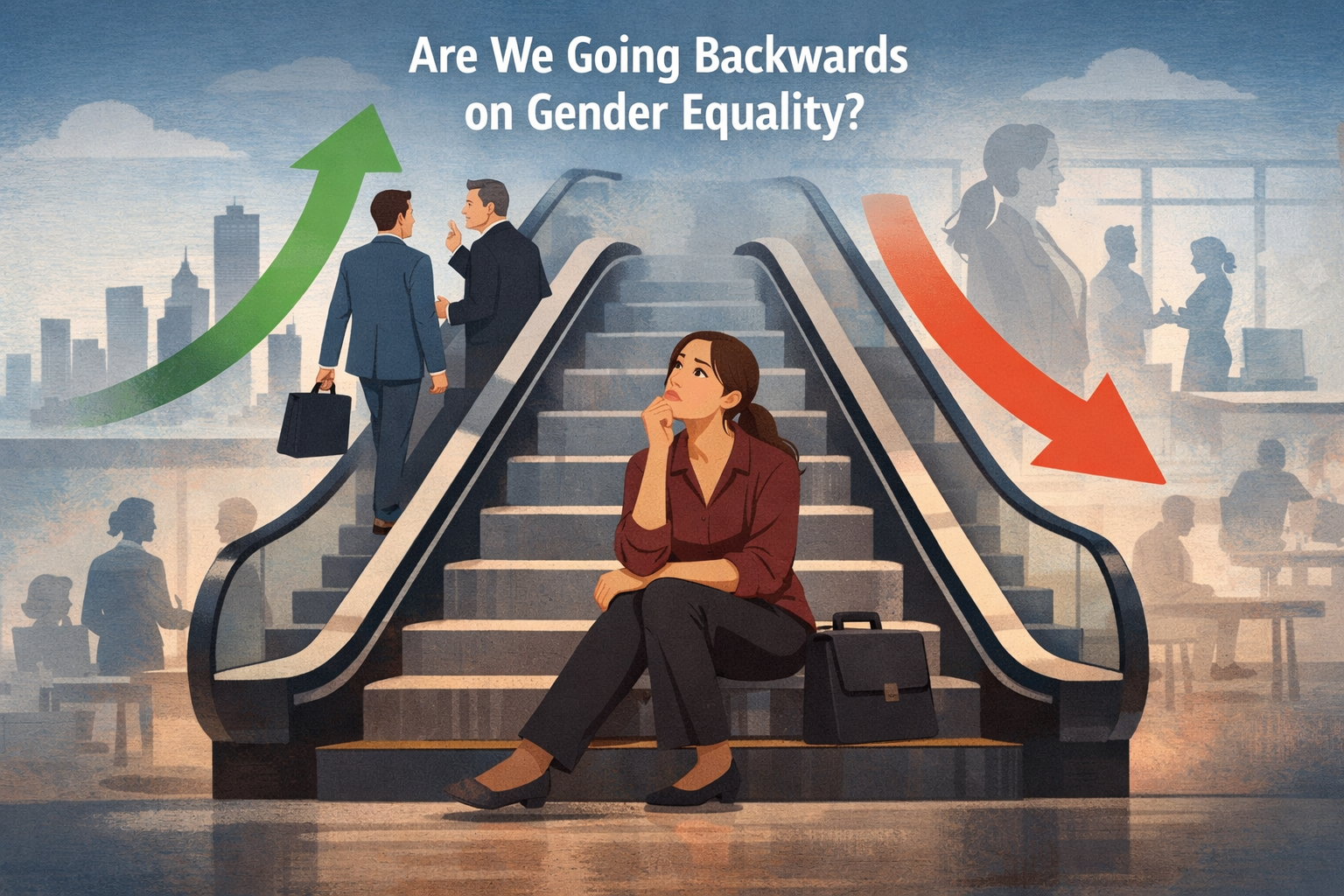
Recent research has sparked debate about attitudes toward gender equality. A global study from the Global Institute for Women’s Leadership at King’s College London found that some younger men hold more traditional views about gender roles than many might expect.
It raises an uncomfortable question. Are we going backwards?
Attitudes about gender and power do not exist separately from the workplace. They shape how people interpret authority, leadership, behaviour and accountability. For organisations committed to creating respectful cultures, this matters.
Over the past decade many workplaces have introduced policies, training and reporting systems designed to address inappropriate behaviour. But culture is not defined by policies alone. It is shaped by everyday leadership decisions, particularly when concerns about behaviour arise.
In this article we explore what the research might signal, how gender attitudes and power dynamics influence workplace behaviour, and what organisations can do to ensure progress continues rather than stalls.
What the research may be telling us
The study conducted by researchers at King’s College London explored attitudes toward gender roles across multiple countries and generations. Some of the findings have attracted attention because they challenge a common assumption that younger generations are automatically more progressive on gender equality.
Among the responses reported, a proportion of Gen Z men expressed support for more traditional views about relationships and gender roles.
It would be overly simplistic to conclude that society is moving backwards across the board. Attitudes toward gender remain complex and varied. However, the findings do highlight something important.
Progress cannot be assumed.
Cultural attitudes evolve over time and those attitudes inevitably influence how people understand power, authority and relationships in professional settings.
Workplaces do not exist in isolation from the societies around them. The way individuals interpret gender roles, leadership and respect outside work can influence how they behave within it.
Why performative moments will not shift culture
Every year organisations mark International Women’s Day with panel discussions, social media campaigns and messages celebrating the achievements of women in the workplace. These moments can be valuable. They create space for reflection and highlight important progress.
But symbolic gestures alone will not change workplace culture.
If the conversation about equality appears once a year and disappears again the following week, employees quickly notice the gap between messaging and reality. Culture is shaped far more by everyday leadership behaviour than by annual campaigns.
Employees pay close attention to signals such as:
• how leaders respond when concerns about behaviour are raised
• whether senior individuals are ever challenged
• whether investigations are fair and credible
• whether accountability applies consistently across the organisation
These signals determine whether employees believe equality and respect are genuine organisational priorities or simply communications messages.
The real work of culture rarely happens during organised events. It happens in the ordinary moments when leaders make decisions about behaviour, accountability and fairness.
When bias becomes more subtle
In many professional workplaces overt sexism has become far less visible than it once was. Training, policies and increased awareness mean most people understand what conduct could lead to complaints or disciplinary action.
However, the disappearance of overt behaviour does not necessarily mean underlying attitudes have disappeared.
In some cases the shift is behavioural rather than cultural. People know what not to say or do in professional settings, but bias can still influence how individuals are perceived and how decisions are made.
This can appear in more subtle ways, for example:
• assumptions about who is ready for leadership
• different interpretations of assertiveness in men and women
• informal networks influencing opportunity and visibility
• concerns being dismissed because they conflict with a positive perception of someone senior
These dynamics are rarely obvious and they do not usually appear in policies. Yet they can shape the everyday experience of employees in significant ways.
Addressing these issues requires more than compliance. It requires leaders who are willing to reflect on how power, reputation and perception influence how concerns are received.
How power dynamics influence whether people speak up
Power dynamics play a significant role in whether employees feel able to challenge behaviour or raise concerns.
HR professionals often see concerns arise in situations where the individuals involved hold very different levels of influence. For example:
• a junior employee raising concerns about a senior manager
• behaviour involving a founder or executive
• misconduct by someone considered commercially critical to the organisation
• teams protecting influential colleagues because of their reputation or status
In these moments organisations sometimes face an uncomfortable commercial question.
How valuable is the person accused of wrongdoing compared with the person raising the concern?
Where someone is viewed as a key revenue generator, high performer or central leader, there can be pressure to protect the individual or minimise disruption. These pressures may not always be explicit, but employees often notice when they exist.
Leadership reactions can also unintentionally undermine confidence in the system. When concerns are raised, leaders sometimes respond based on their personal experience of the individual involved.
Comments such as:
• “That does not sound like them.”
• “I have worked with them for years and never seen that behaviour.”
• “They are one of our strongest leaders.”
While these responses may feel natural, they can unintentionally dismiss the experience of the person raising the concern.
A colleague’s reputation is not evidence that the concern is unfounded. Different people can experience behaviour very differently depending on context, hierarchy and power dynamics.
Approaching concerns with curiosity rather than assumption helps ensure that issues are assessed fairly.
Speak up culture is not tested when behaviour occurs between peers. It is tested when the person whose behaviour is questioned holds the most power.
For organisations thinking about workplace culture, progress depends less on statements and more on consistent behaviour.
A few practical principles can help keep organisations moving forward.
Look beyond symbolic moments
Events such as International Women’s Day can spark valuable conversations, but lasting change depends on everyday leadership decisions about behaviour and accountability.
Be conscious of power dynamics
Concerns involving senior or influential individuals require particular care. Employees need confidence that standards apply consistently regardless of someone’s status.
Avoid assumptions
Positive perceptions of a colleague should not determine whether concerns are taken seriously. Focus on the facts being raised rather than personal experiences.
Recognise subtle bias
Overt behaviour may be less common, but underlying attitudes can still influence how people interpret behaviour, leadership and opportunity.
Strengthen speak up culture
Employees are far more likely to raise concerns early when they believe they will be listened to and treated fairly.
Organisations that embed these principles create environments where respect and accountability are visible rather than performative.
Questions about whether attitudes toward gender equality are shifting remind us that progress cannot be assumed. Workplace culture is shaped by everyday leadership decisions about behaviour, power and accountability.
At Tell Jane we support organisations to navigate complex workplace issues and conduct fair, independent investigations when concerns arise. Creating environments where people feel respected and safe to speak up helps organisations address issues early and keep progress moving forward.