Whistleblowing is a term that appears frequently in employment law, yet it is still widely misunderstood in many organisations. In practice, HR teams often hear the term used interchangeably with grievances or complaints about workplace issues. Legally, however, whistleblowing has a very specific meaning and carries some of the strongest protections available to workers.
Understanding the difference matters. Whistleblowing claims regularly appear in employment tribunal litigation and can create significant legal risk for employers. At the same time, organisations that handle concerns well can surface issues earlier and address behaviour before it escalates.
The law is also evolving. From April 2026, disclosures relating to sexual harassment will explicitly fall within whistleblowing protections.
In this article we explain what whistleblowing means in UK employment law, what protections workers receive, what is changing in 2026, and what HR professionals should keep in mind when concerns about wrongdoing are raised in the workplace.
What whistleblowing means in UK employment law
Whistleblowing protection in the UK is set out in the Employment Rights Act 1996, specifically within Part IVA: Protected Disclosures.
The legislation protects workers who raise concerns about certain types of wrongdoing. These concerns are known as protected disclosures.
For a disclosure to qualify, a worker must reasonably believe that the information they are sharing shows one of the following:
• a criminal offence
• a breach of legal obligation
• a miscarriage of justice
• danger to health and safety
• environmental damage
• deliberate concealment of any of the above
The worker must also reasonably believe the disclosure is made in the public interest.
This is where confusion often arises in the workplace. Not every complaint or workplace issue is whistleblowing. Many concerns raised internally will be more appropriately handled through a grievance process.
However, the legal test does not depend on the label an organisation gives the issue. If a concern meets the legal definition of a protected disclosure, whistleblowing protections may apply regardless of how the organisation initially categorises it.
For HR teams, this means it is important to focus on the substance of the concern rather than the process it sits within.
Who is protected under whistleblowing law
One common misconception is that whistleblowing protection only applies to employees. In reality the law protects workers, which is a broader category.
This can include:
• employees
• agency workers
• some contractors
• trainees and interns in certain circumstances
If a worker makes a protected disclosure, the law protects them from:
• detriment because they raised the concern
• dismissal linked to the disclosure
Dismissal for whistleblowing is treated as automatically unfair dismissal. Importantly, employees do not need two years of service to bring this type of claim.
Compensation for whistleblowing claims is also uncapped, which is one reason these cases can carry significant legal risk for employers.
In practice, most whistleblowing disputes arise not because concerns were raised, but because employees believe they were treated unfavourably after doing so.
What is changing in 2026
From 6 April 2026, the law will explicitly recognise disclosures relating to sexual harassment as qualifying whistleblowing disclosures.
Historically, harassment concerns could sometimes fall within whistleblowing protections where they indicated a breach of legal obligations. However, this position was not always clearly understood.
The 2026 reform makes the position more explicit. Workers who disclose sexual harassment may therefore benefit from whistleblowing protection.
This means that individuals who raise concerns about sexual harassment could be protected from:
• retaliation
• negative treatment linked to the disclosure
• dismissal connected to the disclosure
For HR professionals, this change reinforces an important point. Concerns about workplace behaviour are not always simply interpersonal disputes. In some circumstances they may engage significant legal protection.
It also reflects a broader shift in expectations around how organisations prevent and respond to workplace harassment.
Why whistleblowing links closely to speak up culture
Although whistleblowing is a legal concept, it is also closely connected to workplace culture.
Employees are more likely to raise concerns when they believe:
• the organisation will take concerns seriously
• the process will be fair
• retaliation will not occur
• investigations will be handled properly
Where organisations create these conditions, issues tend to surface earlier and more constructively.
There is another benefit that is often overlooked. A visible speak up culture can act as a deterrent to poor behaviour.
When people know that concerns are likely to be raised and investigated, accountability becomes clearer. This can discourage behaviour that might otherwise go unchallenged.
Of course, for this to work employees must trust that concerns will be handled properly. That means having clear processes and credible investigations when issues arise.
You can read more about how investigations work in practice in our guide to Disciplinary Investigations, which explains the full process organisations should follow when concerns about behaviour are raised.
For HR teams, whistleblowing does not need to feel complicated. A few practical principles can help organisations handle concerns effectively while reducing legal risk.
Make reporting routes clear
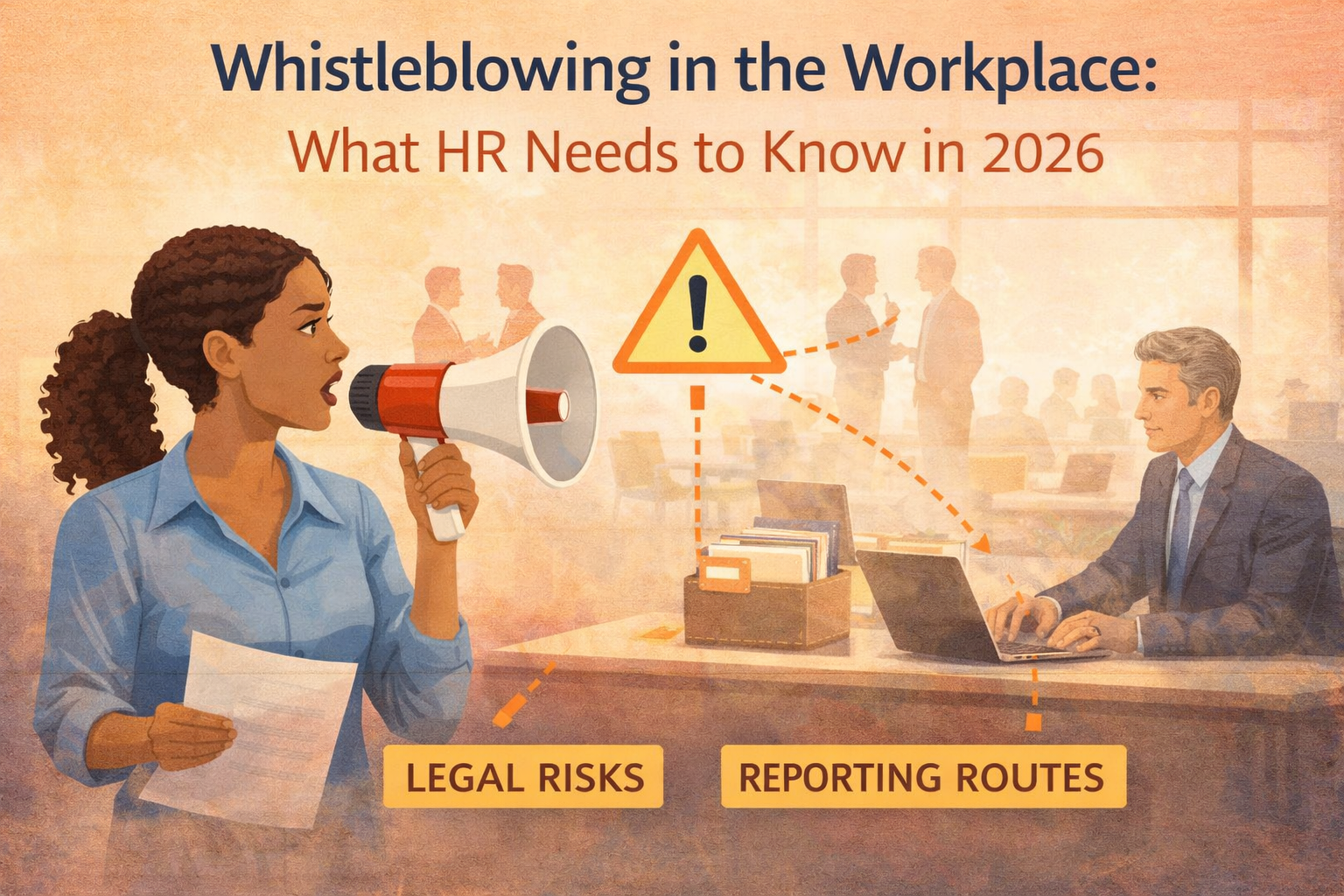
Employees should understand where they can raise concerns about wrongdoing or workplace behaviour. This might include line managers, HR, whistleblowing channels or external reporting routes.
Focus on the substance of the concern
Not every issue labelled as a grievance is simply a grievance. Consider whether the concern could meet the legal definition of a protected disclosure.
Avoid retaliation risks
Managers should understand that treating someone unfavourably because they raised a concern can create legal exposure. Even subtle forms of negative treatment can lead to claims.
Ensure investigations are credible
Employees are far more likely to speak up when they trust concerns will be handled fairly and independently. Clear investigation processes and skilled investigators are key to building that confidence.
When organisations get these foundations right, concerns surface earlier and issues can often be resolved before they escalate.
Whistleblowing law exists to protect people who raise concerns about wrongdoing at work. With new protections emerging in 2026, HR teams need to understand both the legal framework and the cultural conditions that encourage people to speak up.
At Tell Jane we support organisations to handle complex workplace concerns and conduct fair, independent investigations. Creating environments where people feel confident raising concerns helps organisations address issues early and build workplaces where people feel respected.