Domestic abuse doesn’t stop at the office door, and neither do its effects. HR teams and line managers often notice poor attendance, changes in behaviour, or, occasionally, direct disclosures. It can be tricky to know how far your responsibility extends and how best to respond. Supporting employees safely sits within a wider context: capable leadership, strong workplace practices, and a culture that takes duty of care seriously are the foundation.
Why domestic abuse matters in the workplace
Abuse can affect an employee’s wellbeing, engagement, and performance. With hybrid or homeworking becoming more common, signs may be harder to spot. For some, homeworking can increase isolation, reduce visibility to managers, and make it harder to seek support.
Employers have a clear duty of care. While you’re not expected to fix personal situations, you are responsible for ensuring employees can work safely and know where to turn for help.
Where employer responsibility starts
There are practical steps every organisation can take:
- Spot the signs: changes in attendance, performance dips, isolation from colleagues, unexplained injuries, or unusual stress.
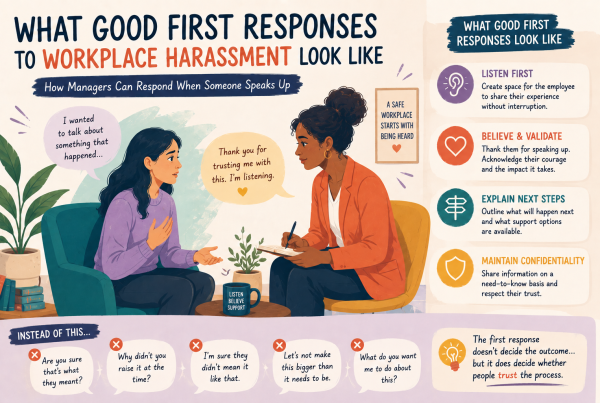
- Respond safely and sensitively: listen, maintain confidentiality, avoid judgement, and provide reassurance.
- Offer practical support: flexible working, adjusted workloads, time off for appointments, or workplace security measures.
- Clear policies: communicate support pathways so employees know where to turn.
Where employer responsibility stops
It’s equally important to recognise the limits:
- You’re not a counsellor, police officer, or life manager.
- You cannot intervene directly in personal relationships or make life decisions for employees.
- Focus on workplace safety, wellbeing, and connecting employees to specialist support.
Emerging legal expectations
UK employment law is evolving in ways that increasingly embed employer responsibility around abuse, harassment, and workplace wellbeing. Proposed measures include statutory paid leave for employees experiencing domestic abuse, requirements for organisations to publish a domestic abuse support policy, and stronger duties to prevent sexual harassment at work. These developments signal that employers will be expected to act proactively, not just reactively, highlighting the importance of capable leaders, clear policies, and trauma-aware practices. While not all measures are law yet, preparing now ensures organisations are ready to meet both legal and cultural expectations.
Practical steps employers can start thinking about
- Learn to spot the signs: subtle changes in behaviour can be indicators of abuse.
- Build knowledge of how domestic abuse presents itself: physical, psychological, financial, and coercive control can all affect work performance.
- Understand the challenges of homeworking: isolation and reduced visibility make it harder for managers to recognise signs.
- Encourage managers to be observant without being intrusive, and provide confidential support pathways.
Signposting to the right support
Supporting employees experiencing domestic abuse means connecting them with professionals who understand the dynamics and risks. While Employee Assistance Programmes (EAPs) are often used, they may not provide the specialised, ongoing support victims need. Employers should be aware of and able to signpost to:
- Specialist domestic abuse charities and helplines – e.g., Women’s Aid, Refuge, National Domestic Abuse Helpline
- Local support services – councils or community organisations providing practical and legal support
- Legal advice and housing support – for employees who may need protection orders, legal guidance, or safe housing
- Financial and employment advice – recognising that abuse often intersects with economic control and workplace issues
- Mental health specialists with domestic abuse expertise – if EAP is used, ensure it’s complemented by specialist support
Key guidance for employers:
- Make the resource list easily accessible to managers and HR teams.
- Ensure employees know that accessing support is confidential and voluntary.
- Train managers to understand that EAP alone is rarely sufficient, it should be part of a broader network of support.
The wider employment context
Domestic abuse doesn’t exist in isolation. Organisations also face:
- Growing protections around sexual harassment and other abusive behaviours
- Expectations that performance management is handled proactively and constructively from the outset
- A need for capable leadership: managers with strong interpersonal skills who understand their duty of care
At the heart of it all is culture. Employees need to trust that leaders take their wellbeing seriously, and leaders need the confidence, knowledge, and tools to act appropriately.
How training helps
Training equips HR teams and managers to:
- Respond consistently and trauma-aware
- Recognise the signs of abuse
- Apply practical support measures safely
- Link employees with external expert support
- Connect leadership capability, performance management, and duty of care into one coherent approach
Key takeaways for employers
- Recognise the signs and respond safely
- Offer support but respect boundaries
- Build capable leadership and robust performance management practices
- Embed training and policy into organisational culture
Domestic abuse is complex and often hidden, but workplaces don’t have to navigate it alone. With the right training, policies, and capable leadership, organisations can protect staff, uphold their duty of care, and foster an environment where people feel respected and supported.
Talk to Tell Jane about developing training, policies, and leadership programmes that help your organisation support employees safely and responsibly. Email us today at hello@telljane.co.uk