Last week I went paragliding off the side of a mountain.
Three days later I was sitting beside my mum’s hospital bed.
It was a sharp reminder of something many people begin to experience in their forties: life can suddenly become very full.
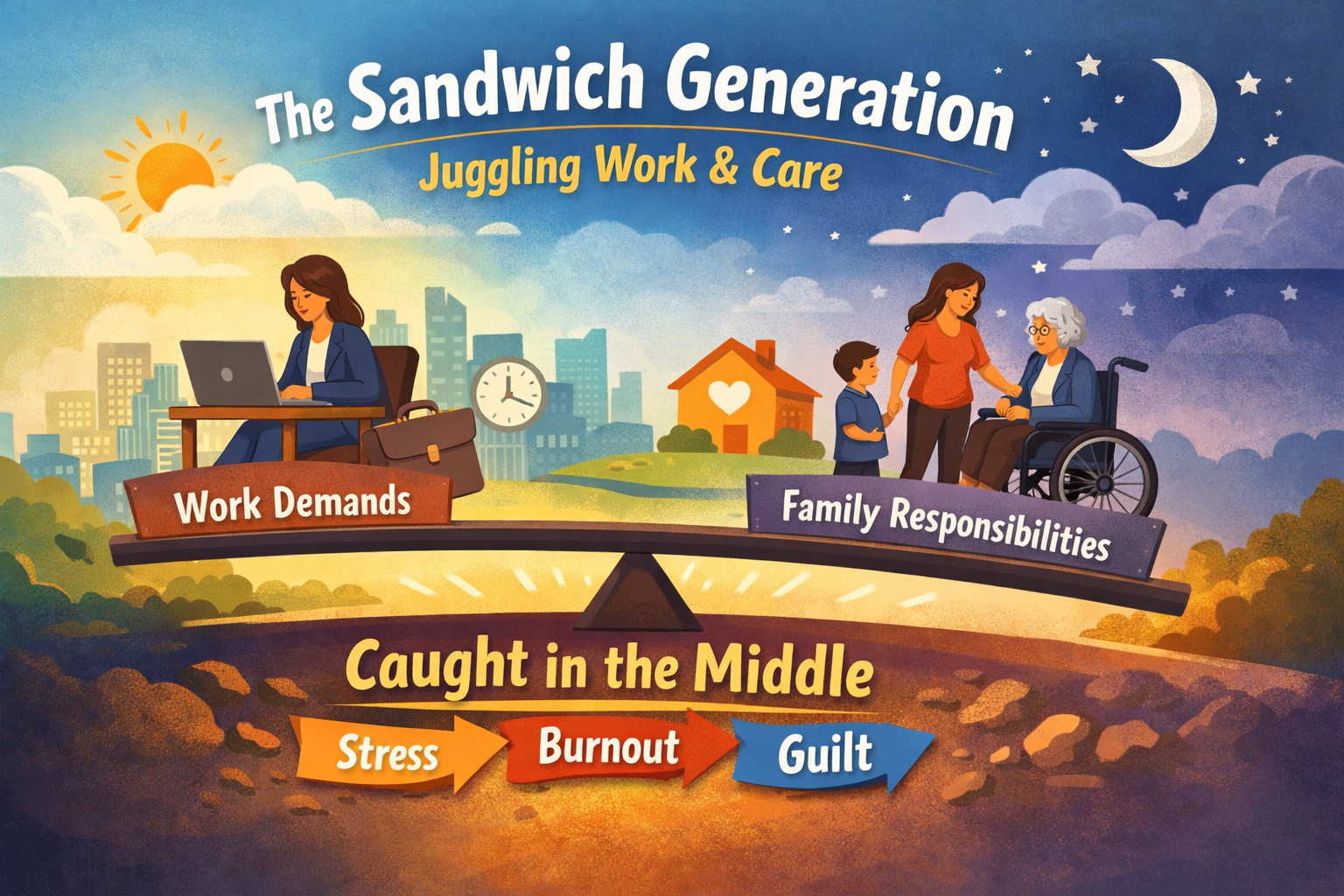
For many employees, this stage of life brings a particular kind of pressure. Children still need support. Parents begin to age. Careers are often reaching their most demanding stage. The responsibilities of work and family do not arrive one at a time. They tend to collide.
This group is often described as the sandwich generation. People who are supporting children while also caring for ageing relatives.
And yet many workplaces are still designed around a model of the “ideal worker” who has none of these responsibilities. Someone who is always available. Someone whose time and energy belong almost entirely to their job.
That model is increasingly out of step with reality.
For many organisations, the employees navigating this stage of life are also some of their most experienced and valuable people. They are often leading teams, managing complex projects, and holding deep organisational knowledge. They are exactly the people businesses want to retain and develop.
But when workplaces fail to recognise the pressures people are managing outside of work, the consequences can be significant. Burnout increases. Engagement drops. Talented people quietly step back from leadership pathways or leave organisations altogether.
The impact is not evenly distributed either.
The practical and emotional load of caring responsibilities still tends to fall disproportionately on women. Without thoughtful workplace support, the very stage when careers could accelerate can become the stage when many women feel forced to slow down.
So what can organisations and leaders do differently?
Judge performance by outcomes, not presence
Being physically present at a desk for long hours is not the same as being effective. Leaders who focus on output rather than visibility create space for people to manage competing responsibilities without compromising results.
Normalise flexibility at every level
Flexible working cannot quietly disappear when someone becomes more senior. If organisations want experienced employees to stay and progress, flexibility must be possible in leadership roles too.
Train managers to respond well when life happens
A compassionate and practical response from a manager during a difficult period can build long term trust and loyalty. The opposite can push people away quickly.
Avoid career penalties for caring responsibilities
Employees should not feel that stepping back temporarily, working flexibly, or managing family commitments will quietly derail their progression.
Create space for honest conversations
Many employees hesitate to talk openly about caring responsibilities because they fear it will affect how they are perceived. Cultures that encourage openness allow leaders to respond earlier and more effectively.
Most people will experience moments when life becomes complicated.
The question for organisations is simple: when those moments arrive, will your culture support people, or quietly push them out?
Visit Tell Jane to learn more about creating an inclusive workplace that leaves employees feeling supported beyond the workplace.