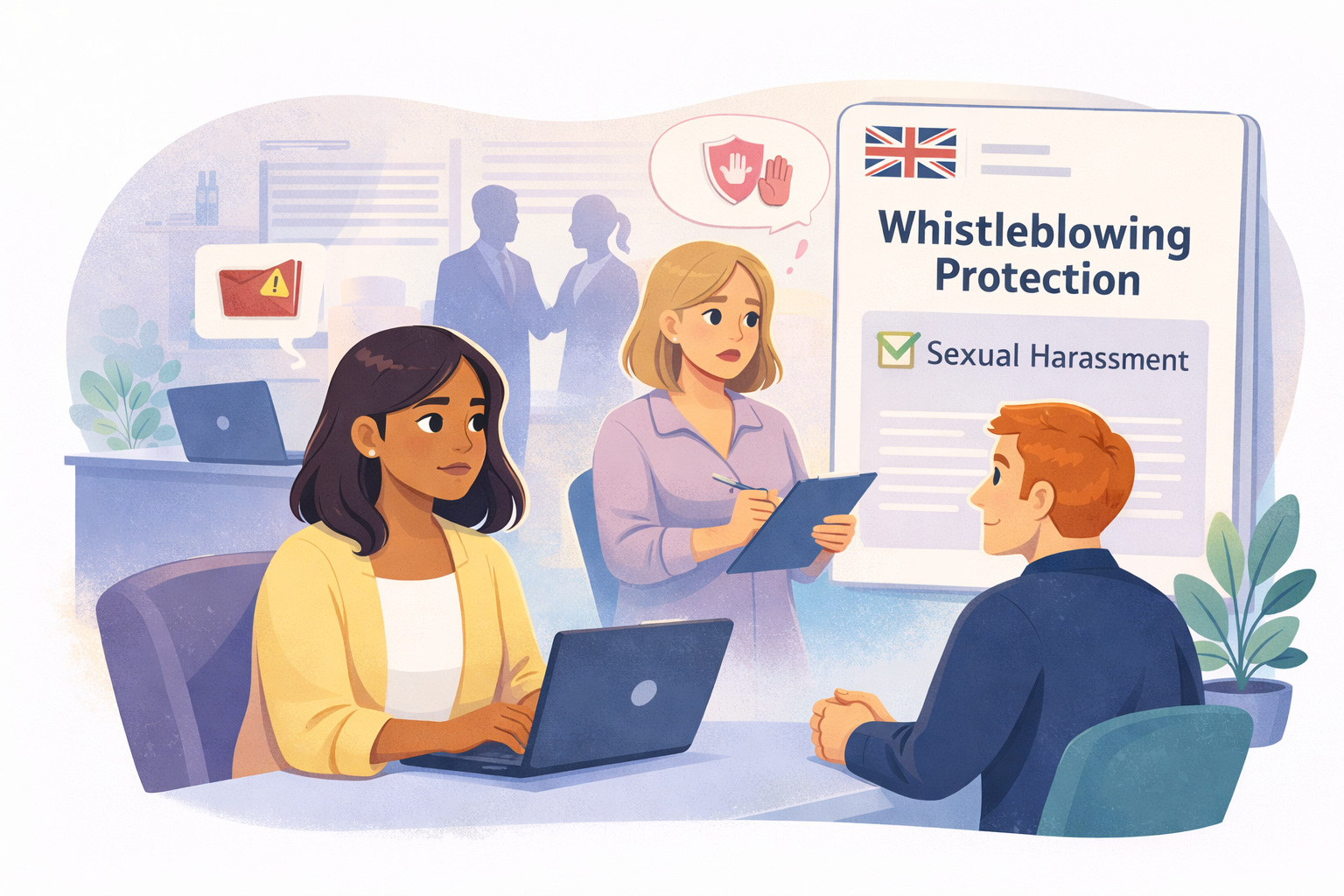
From April 2026, sexual harassment will become a qualifying disclosure under UK whistleblowing law. In practical terms, this means workers who report sexual harassment will have stronger legal protection from detriment and dismissal.
At first glance this looks like a technical legal change. Employment lawyers will understandably focus on the implications for claims and tribunal risk.
But the real significance sits elsewhere.
This reform signals a clear expectation that organisations create environments where people feel safe to raise concerns about behaviour at work. It reflects a growing recognition that harassment is rarely just an individual issue. It is often a signal about culture, power dynamics and leadership accountability.
For HR leaders and senior teams, the real question is not simply how the law is changing. It is whether their organisation has the kind of speak up culture that allows issues to surface early and be addressed constructively.
What the 2026 change actually means
From April 2026, disclosures about sexual harassment may qualify for protection under the whistleblowing framework.
Workers who report concerns could be protected from:
• detriment because they raised the issue
• dismissal linked to the disclosure
• retaliation for speaking up
This matters because whistleblowing protection is particularly strong. If an employee is dismissed for making a protected disclosure, the dismissal can be automatically unfair.
The change also reinforces an important principle.
Raising concerns about workplace behaviour should not come at a personal cost.
For many employees, the decision to speak up is already difficult. Fear of being labelled a troublemaker, damaging career prospects or facing backlash from colleagues can be powerful deterrents. Strengthening legal protection is designed to reduce that fear.
However, legislation alone does not create the conditions where people feel confident raising concerns.
Culture does.
Why speak up culture is about prevention, not just reporting
When organisations talk about speak up culture, the focus is often on reporting mechanisms. Hotlines, policies and whistleblowing procedures are important.
But the real power of a speak up culture sits earlier than that.
It changes behaviour.
When people believe that concerns will be raised and taken seriously, the perceived risk of inappropriate behaviour increases. Accountability becomes visible.
This has a powerful deterrent effect.
Perpetrators rarely view their behaviour in isolation. They assess risk. They notice signals within an organisation such as:
• whether leaders challenge poor behaviour
• whether investigations are credible and fair
• whether complaints are taken seriously
• whether bystanders feel able to raise concerns
Where those signals suggest silence or inaction, behaviour is more likely to continue unchecked.
Where those signals suggest accountability, behaviour often changes.
In this sense, a genuine speak up culture is not only about helping people report problems. It actively discourages those problems from happening in the first place.
Why organisations still struggle with speaking up
Despite good intentions, many organisations still find it difficult to create environments where people feel comfortable raising concerns.
Some of the most common barriers include:
Lack of trust in reporting channels
Employees may worry that raising concerns will not remain confidential or that the issue will not be handled fairly.
Manager confidence
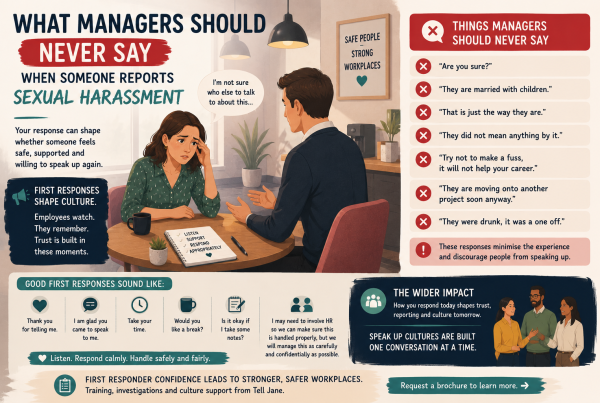
Line managers are often the first point of contact for concerns about behaviour. Yet many managers feel unsure how to respond, particularly where allegations involve senior colleagues or complex interpersonal dynamics.
Fear of escalation
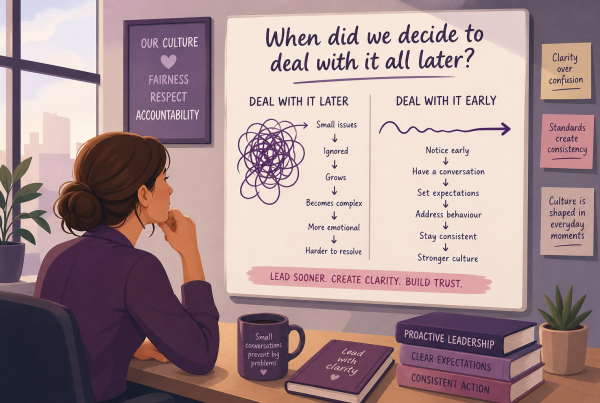
Some organisations avoid addressing concerns early because they worry about triggering formal processes. Ironically this often leads to issues escalating further.
Inconsistent responses
Employees quickly notice when behaviour is challenged in some situations but overlooked in others. Inconsistency erodes confidence in the system.
When these barriers exist, concerns tend to surface much later. At that point they are more likely to become formal grievances, investigations or legal claims.
The role of credible investigations
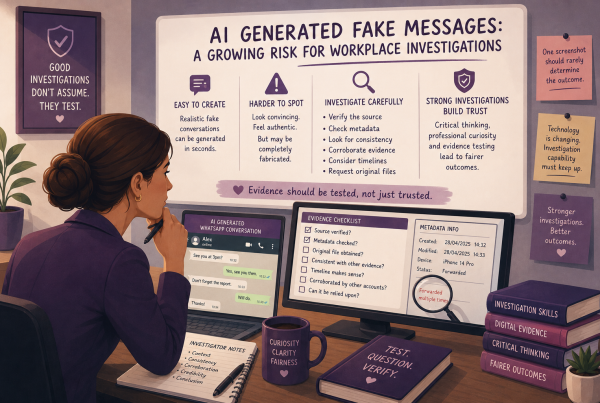
A speak up culture only works if people believe concerns will be addressed properly.
That means organisations need investigation processes that are:
• fair
• independent
• proportionate
• handled with care
When employees trust the process, they are far more likely to raise issues early.
Conversely, when investigations are perceived as defensive or biased, confidence quickly disappears.
Organisations that want to strengthen speak up culture should therefore consider how concerns are handled once they are raised. Clear processes and skilled investigators make a significant difference.
You can read more about the full investigation process in our guide to disciplinary investigations.
Organisations preparing for the 2026 whistleblowing change may find it helpful to reflect on a few practical questions.
Do your people know where to raise concerns about behaviour?
Reporting routes should be clear and accessible. Employees should not need to navigate complex policies to understand how to speak up.
Do employees trust those channels?
Policies alone do not create trust. Confidence develops when employees see concerns taken seriously and handled fairly.
Are managers equipped to respond to concerns?
Managers play a crucial role in early intervention. Providing them with guidance and training can significantly improve outcomes.
Are investigations credible and consistent?
Employees notice when processes feel fair and independent. They also notice when they do not.
At its heart, a speak up culture is not simply about encouraging complaints. It is about creating conditions where people feel respected and confident that concerns will be handled constructively.
When those conditions exist, issues surface earlier and organisations are better placed to address them.
The 2026 whistleblowing reform sends a clear message. Speaking up about sexual harassment should be protected and taken seriously.
But legislation alone cannot create the trust that makes people speak up.
At Tell Jane we support organisations to respond to complex workplace issues and strengthen the systems that allow concerns to surface early. Because when accountability is clear, behaviour changes and organisations are far better placed to prevent problems before they escalate.