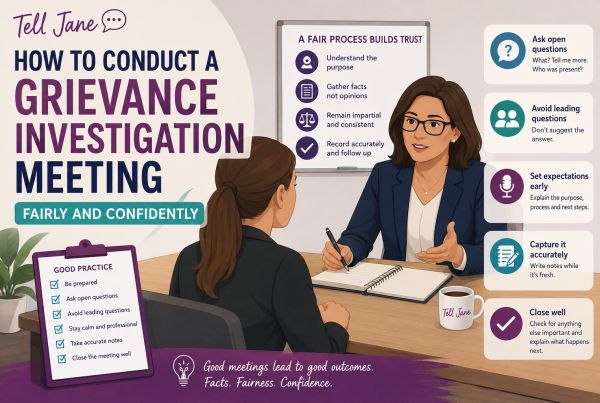
Fair investigations aren’t just about following policy, they’re about making sure every employee is treated equitably, whatever their background, identity or circumstance. Investigations touch on sensitive issues, and poor handling can unintentionally cause harm, create mistrust, or even expose the organisation to legal risk.
Embedding equality, diversity and inclusion (ED&I) into workplace investigations isn’t just a nice-to-have. It ensures employees feel safe, heard and respected throughout the process. It also protects the organisation by reducing bias, microaggressions, and inconsistencies in how complaints are handled. In this article, we explore practical ways to apply ED&I principles in investigations, helping HR and managers act with confidence while maintaining fairness and compliance.
Why ED&I principles matter in HR investigations
Investigations need to be fair and equitable across all protected characteristics under the Equality Act 2010. That includes age, race, sex, disability, religion, sexual orientation, gender reassignment, marriage or civil partnership, and pregnancy or maternity.
Key considerations include:
- Bias can be subtle or unconscious. Even well-intentioned investigators may make assumptions that affect how evidence is assessed or how employees are treated.
- Careful planning matters. Choosing the right investigator can make a huge difference to whether a complainant feels safe and heard. For example:
- A race-related allegation may not feel safe with a white investigator.
- A young junior female who has been sexually harassed may struggle to speak freely to a senior male investigator.
- A race-related allegation may not feel safe with a white investigator.
- Fair, consistent treatment builds trust. Applying the same standards to all cases reduces the risk of complaints being perceived as biased or arbitrary.
ED&I principles aren’t just about compliance—they’re about creating a process that is safe, respectful, and credible.
Avoiding bias in evidence gathering
Bias can creep in at every stage, from reviewing emails to evaluating witness statements. Careful planning is key to reducing risk and avoiding microaggressions.
Practical steps include:
- Standardise processes. Use structured templates and clear guidance for gathering evidence to avoid subjective interpretation.
- Consider context. Cultural, gender, age, disability or neurodiverse factors may affect how someone communicates or behaves. Dismissing behaviour because it doesn’t match expectations can create bias.
- Train investigators. Awareness of unconscious bias and microaggressions helps prevent them influencing decisions.
- Avoid assumptions. Do not discount evidence simply because it challenges preconceptions or your own view of what is acceptable.
Planning carefully at this stage ensures the investigation process is thorough, fair and legally sound.
Inclusive communication during investigations
Communication is central to embedding ED&I in investigations. Employees must feel informed, supported and able to participate safely.
Best practice includes:
- Use clear, accessible language. Avoid jargon or technical terms that might confuse or intimidate employees.
- Explain rights and options. Ensure employees understand representation, support resources and next steps.
- Adjust for needs. Provide accessible formats or additional support for neurodiverse employees, those with disabilities, or those for whom English is not a first language.
- Maintain confidentiality. Employees are more likely to speak openly if they trust the process will be discreet and professional.
- Check in. Regular updates on timelines and next steps reduce anxiety and reinforce fairness.
Inclusive communication demonstrates respect, reduces the risk of further harm, and reinforces confidence in the process.
ED&I as part of organisational culture
Embedding ED&I into investigations is more than a procedural step, it reflects and reinforces broader organisational values.
Organisations should:
- Train managers and HR staff. Focus on recognising bias, avoiding microaggressions, and promoting equity in decision-making.
- Integrate ED&I into policy and practice. Align investigation procedures with the organisation’s cultural values to make inclusion part of everyday operations.
- Ensure consistent standards. Treat all complaints using the same approach, thresholds, and documentation standards.
- Avoid box-ticking. ED&I should be a lived value, not just a compliance exercise.
When ED&I is embedded into the culture, investigations are more likely to be perceived as fair and employees are more likely to engage with the process openly.
Practical takeaways
Checklist for ED&I-focused investigations:
- Plan carefully to reduce risks of bias or microaggressions.
- Consider the complainant’s perspective when choosing investigators to ensure they feel safe and heard.
- Standardise approaches to evidence gathering to maintain fairness.
- Use inclusive and accessible communication throughout.
- Embed ED&I into organisational culture, not just policy.
Key point: Thoughtful planning, matched investigator selection, and inclusive practice protect employees, uphold trust, and strengthen organisational integrity.
Embedding equality, diversity and inclusion into workplace investigations ensures fairness, reduces risk of harm, and demonstrates genuine organisational commitment. Careful planning, thoughtful investigator selection, and inclusive communication are central to success. Organisations that apply these principles consistently not only comply with legal requirements but also foster trust and confidence among employees.
For guidance on embedding ED&I into workplace investigations, explore our services or read our full investigation guide. Or contact us directly at hello@telljane.co.uk