The law around preventing sexual harassment at work is changing – and it couldn’t come at a better time.
The Worker Protection (Amendment of Equality Act 2010) Act 2023 marks a game-changing shift, pushing employers and their people teams to take a more proactive approach, rather than simply reacting to complaints of sexual harassment.
It’s a sad reality that far too many people remain silent when encountering inappropriate behaviour at work; so it’s more important than ever to tackle issues before they escalate.
In this blog, we’ll walk you through practical strategies to help you get ahead and build safer, more proactive workplaces where everyone feels respected.
Worker Protection (Amendment of Equality Act 2010) Act 2023
The Worker Protection (Amendment of Equality Act 2010) Act 2023 takes effect on 26 October 2024. Simply responding to allegations of sexual harassment or taking reactive action to address any incidents after they’ve already happened is not enough.
Employers now have a preventative, proactive duty to stop sexual harassment before it occurs and failure to meet this obligation can lead to enforcement action by the Equality and Human Rights Commission [EHRC]. Employment tribunals may also apply a compensation uplift of up to 25% if sexual harassment is proven.
Why sexual harassment prevention matters
Everyone deserves to feel safe, respected and included at work. Unfortunately, sexual harassment in the workplace remains a significant issue, as highlighted by women’s organisations, trade unions and the media. The Trades Union Congress reports that three in five women (58%), and almost two-thirds (62%) of women aged between 25 and 34, have experienced sexual harassment, bullying or verbal abuse at work.
Alarmingly, sexual harassment can happen anywhere, not just in the office. It often occurs in situations where the lines between social and professional environments become blurred, such as social events, company retreats or ‘casual Fridays’.
As technology increasingly shapes and influences how we interact and behave at work, sexual harassment is no longer limited to face-to-face interactions. It now extends into virtual spaces, happening just as frequently through emails, phone calls, messaging apps and social media — and on personal devices and outside working hours – as it does in the physical space. This means that sexual harassment can occur anywhere, at any time – but with equally devastating consequences.
The impact of sexual harassment is far-reaching; it undermines the safety, dignity and equality of anyone in any workplace, creating a hostile and demeaning environment. It can also harm productivity, increase turnover, damage a company’s reputation and negatively affect mental health.
Preventing sexual harassment in your workplace is not just about complying with new legislation, but creating a safe and respectful workplace culture.
10 practical tips for preventing sexual harassment
The EHRC’s ‘Sexual harassment and harassment at work: technical guidance’ urges employers to proactively assess any risks, identify actions and regularly review their processes.
Here are some key strategies to effectively prevent and respond to sexual harassment at work.
- Have an impactful, standalone sexual harassment policy: Go beyond the basics. Ensure your policy is a living document that clearly outlines senior leaders’ commitment to prevention and specifies the behaviours that constitute sexual harassment, using real-world examples. Include details of your transparent reporting procedures and, importantly, the consequences if sexual harassment takes place.
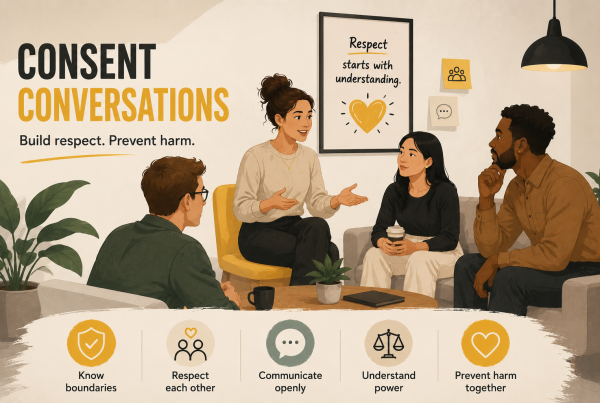
- Create open dialogues and awareness: Host workshops, events and panels to facilitate open dialogues about sexual harassment and respect and consider incorporating real-life scenarios into training programmes to help build empathy and understanding in a dynamic way.
- Communicate your approach: Make your commitment to tackling sexual harassment powerfully vocal and visible. Communicate your approach to employees – and any third parties who may access your workplace like clients – with posters, engaging blogs and regular updates on your intranet to effectively convey your message. This not only reinforces a culture of respect but leaves absolutely no room for misinterpretation.
- Create safe reporting spaces: Establish informal, accessible and anonymous channels for reporting concerns. As well as one-on-one meetings with line managers, return-to-work interviews or anonymous reporting channels, take it one step further. Digital suggestion boxes or peer support groups encourage open communication without fear of judgement.
- Lead by example: Senior leaders must play a key role in creating respectful workplaces free from sexual harassment. Encourage them to visibly prioritise a harassment-free workplace, actively engage in training and hold themselves accountable, sending a powerful message across your business.
- Provide continuous training, not a one-off: Approach sexual harassment training as a continuous learning journey rather than a tick-box exercise and make sure it is current, engaging and interactive. Infuse it with real-life scenarios to spark discussions and, if people feel comfortable, provide opportunities for employees to share experiences.
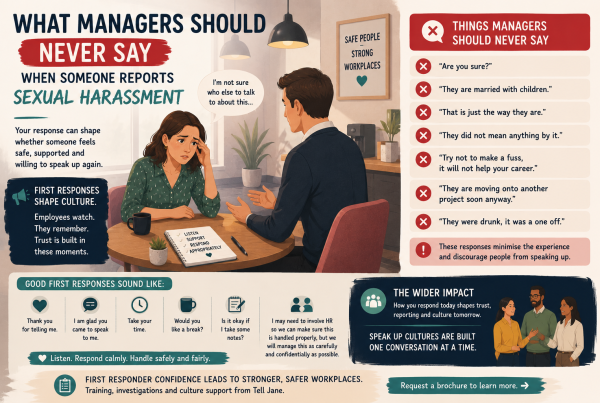
- Establish clear reporting channels: Provide multiple, accessible and objective ways for employees to report sexual harassment without fear of retaliation. Consider partnering with a trusted external service, like Tell Jane’s employee hotline so employees have an objective and secure option if they are uncomfortable reporting internally.
- Take complaints seriously: Treat each report of sexual harassment with the seriousness and urgency it deserves, and ensure investigations are thorough and impartial. Communicate that all complaints are valid and deserve attention, and be clear that if a complaint is not upheld, no adverse action will be taken against the complainant.
- Respond appropriately to complaints: Handle each complaint based on its unique context and severity, and follow the appropriate procedure. For cases where the person making the complaint is experiencing trauma, consider using a specialist investigator who can navigate the issue compassionately and sensitively.
- Stay ahead of the game: Regularly review and update your procedures, policies and training on sexual harassment to get ahead of emerging issues. Leverage technology for monitoring and reporting sexual harassment, so your approach evolveswith the changing work landscape.
Sexual harassment at work is not inevitable, it is preventable. Employers must go beyond the minimum legal requirements to protect their employees, change behaviour within their workplace and build a safe, inclusive culture.
Tell Jane can provide further practical tips, guidance and training on preventing sexual harassment at work and the Tell Jane anonymous reporting hotline provides a safe platform for employees to voice their concerns without fear or reprisal.
Reach out for our latest ‘Prevention of Sexual Harassment at Work – Policy Template’ for businesses to customise and apply within their workplace.
Email hello@telljane.co.uk to discover more – we’d love to chat.