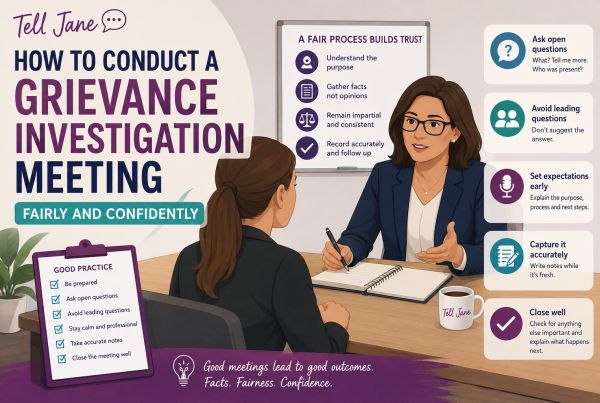
When workplace investigations arise, particularly in cases of misconduct, sexual harassment, or other sensitive issues, HR professionals can at times face a decision: Should the investigation be handled internally or by a third-party investigator?
Both approaches have their advantages and drawbacks. Choosing the right option depends on the specifics of the case, the organisation’s resources, and the need for neutrality.
This guide will help you weigh the pros and cons of internal teams and third-party investigators to determine what works best for your workplace investigations.
The case for internal teams
Internal teams are often the first point of contact for handling workplace investigations. HR professionals already know the organisation’s culture, policies, and personnel, making them well-positioned to address concerns efficiently.
Pros of internal teams
- Cost-effective
Internal investigations typically involve fewer direct costs, as existing staff handle the process without the need for external fees. - Familiarity with the organisation
Internal teams understand the company’s dynamics, policies, and history, which can help in uncovering relevant information quickly. - Quicker action
Internal teams can often begin workplace investigations immediately, ensuring swift responses to pressing issues.
Cons of internal teams
- Potential bias
Even the most well-intentioned internal teams may be perceived as biased, particularly if the alleged misconduct involves senior management or close colleagues. - Lack of specialised expertise
Some workplace investigations, such as sexual harassment investigations, require specialised knowledge of employment law and investigation techniques, which internal teams may lack. - Confidentiality concerns
Employees may hesitate to share information openly with internal teams, fearing potential repercussions or breaches of confidentiality.
The case for third-party investigators
Third-party investigators bring an external perspective and expertise to workplace investigations. They are often used for complex or high-stakes cases, such as allegations of sexual harassment or misconduct involving multiple parties.
Pros of third-party investigators
- Neutrality and objectivity
External investigators are independent, ensuring an impartial process. This is particularly important when investigating claims involving senior leaders or high-profile cases. - Expertise and experience
Third-party investigators are specialists in misconduct investigations, with a deep understanding of UK employment law, data protection, and best practices. - Enhanced employee trust
Employees may feel more comfortable sharing information with an independent investigator, knowing their concerns will be treated fairly and without internal influence. - Focus and efficiency
Third-party investigators can dedicate their time solely to the investigation, avoiding the distractions of other HR responsibilities.
Cons of third-party investigators
- Higher costs
Hiring an external investigator involves additional expense, which may not be feasible for all organisations. - Learning curve
External investigators may require time to understand the organisation’s structure, culture, and policies, which can delay the process slightly. - Potential disruption
The presence of an external investigator can create tension or speculation among employees, particularly if the purpose of their involvement isn’t communicated clearly.
Key considerations when choosing
When deciding between internal teams and third-party investigators, ask these questions:
- Is neutrality essential? If impartiality is critical, such as in sexual harassment investigations or cases involving senior staff, a third-party investigator is often the better choice.
- Does the case require specialist knowledge? For complex or legal-sensitive cases, the expertise of an external investigator can ensure compliance and thoroughness.
- What is the organisation’s capacity? If your HR team is stretched thin, outsourcing can help avoid delays and ensure a focused investigation.
- How important is cost? While third-party investigators can be more expensive, the investment may be worth it to avoid the risks of a poorly handled internal investigation.
Final thoughts
The choice between internal teams and third-party investigators isn’t always straightforward, but it’s a decision that can significantly impact the outcome of workplace investigations.
For high-stakes cases such as sexual harassment investigations or allegations of serious misconduct, the neutrality and expertise of a third party may be invaluable. However, for less complex matters, a well-trained internal team can often handle investigations effectively and efficiently.
Need guidance on your workplace investigations? Whether you’re considering internal or external approaches, we’re here to help you make the right choice.
At Tell Jane, we can support your organisation in conducting fair and impartial workplace investigations through training in-house investigations or carrying out investigations on your behalf.
Email us today at hello@telljane.co.uk to find out more.