Most organisations spend a lot of time thinking about policies, investigations, and legal risk when it comes to sexual harassment at work.
But in reality, trust is usually shaped much earlier than that.
It is shaped in the first conversation. The moment someone decides to tell another person what has happened to them.
That first response matters enormously. Not just for the individual involved, but for the wider culture around them too.
Because there is nothing quite like a badly handled complaint to linger in an organisation and slowly erode trust. Employees remember these moments. They talk about them quietly with colleagues. They watch how leaders respond. They decide whether speaking up feels safe or risky.
And most people do not report sexual harassment lightly.
By the time someone says something, they have often already spent days, weeks, or even months going over it in their head. Wondering whether they misunderstood. Questioning whether they are overreacting. Worrying about what will happen if they speak up.
Will anyone believe me?
Will this affect my career?
Will people think I am making a fuss?
That is why the first response matters so much.
What people need in that moment is not panic, defensiveness, or minimising. They need calm. They need reassurance. They need to feel that someone is taking them seriously.
Unfortunately, this is often where organisations get it wrong.
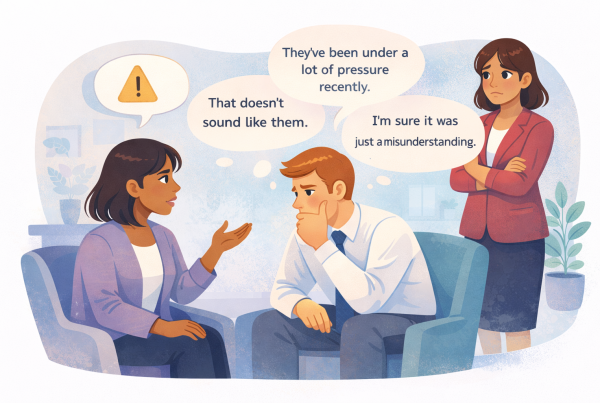
Sometimes the response is dismissive straight away.
“Are you sure?”
“They are married with children.”
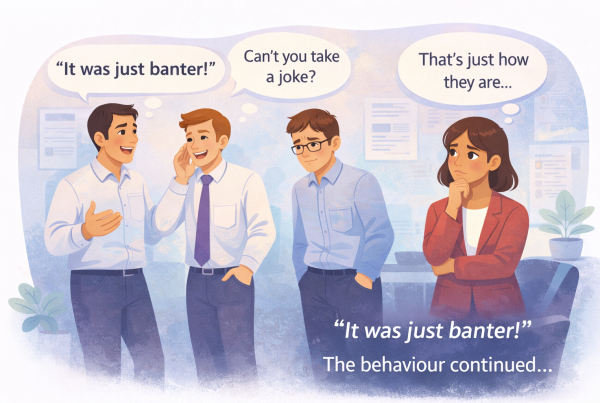
“That is just the way they are.”
“They did not mean anything by it.”
“Try not to make a fuss, it will not help your career.”
“They are moving onto another project soon anyway.”
“They were drunk, it was a one off.”
Comments like these might be intended to calm the situation down, but what they actually do is minimise the experience and discourage people from speaking up again.
Sometimes the mistakes are more subtle.
A manager becomes very empathetic and supportive in the moment, promises to keep things confidential, and then quietly does nothing because they are trying to protect the person from stress or escalation.
But confidentiality should never become an excuse for inaction.
Employees should understand how information will be handled, who may need to know, and what the next steps are likely to be. Otherwise people are left feeling unsupported, confused, and uncertain about whether the organisation took the concern seriously at all.
Another common mistake is trying to fix or investigate the issue immediately. Managers panic. They ask too many questions, start testing evidence, or try to decide whether the behaviour was serious enough there and then.
The role of the first responder is not to investigate or solve the issue in the moment.
It is to listen properly, respond appropriately, and make sure the concern is handled safely and fairly from that point onwards.
And that balance matters.
Taking a concern seriously does not mean prejudging the outcome. You can be calm, empathetic, and supportive without making promises you cannot keep.
In practice, good first responses are often quite simple.
They thank the person for coming forward.
They acknowledge that the conversation may have been difficult.
They allow pauses if the person becomes upset or needs a break.
They ask permission before taking notes.
They explain what the next steps are likely to be.
They are honest about who may need to be involved.
They seek advice if they are unsure how to handle the situation properly.
Most importantly, they make the person feel heard and reassured.
Not because every concern immediately leads to a formal investigation or disciplinary outcome, but because the individual can see the organisation is willing to take the matter seriously and respond appropriately.
Employees do not just remember the first conversation. They remember what happens afterwards too.
The silence.
The lack of updates.
The feeling that the issue quietly disappeared.
That is where trust starts to break down.
And the wider impact of this is significant.
A badly handled complaint rarely affects just one individual. Other employees are always watching, even quietly. They notice whether concerns are taken seriously. They notice whether behaviour is challenged consistently. They notice whether leaders appear uncomfortable, defensive, or avoidant.
Over time, those moments shape culture far more than policies ever will.
Speak up cultures are not built through posters, campaigns, or statements on a website. They are built in these small moments where someone takes a risk and decides to tell you something difficult.
And it is important to recognise that many managers are genuinely nervous about these conversations. They are worried about saying the wrong thing, escalating unnecessarily, damaging relationships in the team, or mishandling confidentiality.
So sometimes they freeze. Or minimise. Or try to make the issue disappear quickly.
Not because they do not care, but because they do not feel confident.
That is why first responder training matters so much. Organisations cannot assume people instinctively know how to handle disclosures well, particularly when the conversation feels emotionally charged or high stakes.
There is also a clear business case for getting this right.
When concerns are handled badly, organisations often see lower trust in leadership, reduced reporting, higher employee relations issues, disengagement, attrition, reputational damage, and increased legal risk.
But when concerns are handled well, employees are more likely to trust the organisation, engage with the process, and believe leadership is willing to address difficult behaviour properly.
The organisations that handle these situations best are not always the ones with the longest policies or the most complex procedures. They are usually the ones where leaders know how to respond calmly, fairly, and confidently when someone speaks up.
Because trust is built in these moments.
Quietly. Consistently. One conversation at a time.
Tell Jane provides first responder training, investigations, and culture support to help organisations respond confidently and fairly when employees speak up. Request a brochure to learn more.