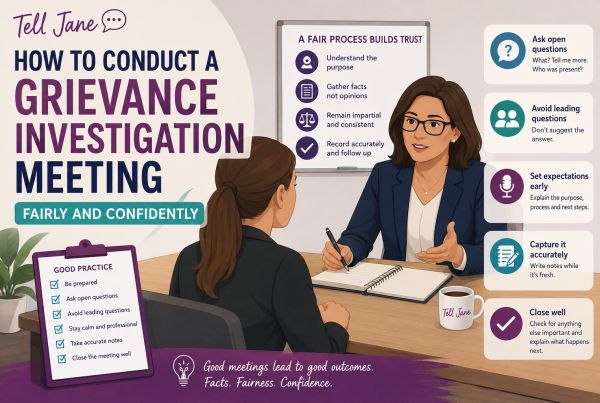
Workplace investigations are crucial for addressing allegations of misconduct, sexual harassment, or third-party issues. However, when these investigations are poorly handled, the fallout can be severe. Mishandling an investigation risks not only legal and reputational damage but also a profound loss of employee trust.
This blog explores the consequences of mismanaged workplace investigations and offers practical steps to rebuild trust within your organisation.
The stakes of workplace investigations
Workplace investigations are often triggered by sensitive and high-stakes allegations, such as sexual harassment or misconduct. These situations demand a careful, professional response to ensure fairness, maintain confidentiality, and uphold organisational integrity.
When investigations are mishandled—whether through bias, delays, or breaches of confidentiality—the damage extends beyond the immediate case. Employees may lose confidence in leadership, disengage from their roles, or even leave the organisation altogether.
Consequences of poorly handled investigations
1. Erosion of employee trust
Trust is foundational to a healthy workplace culture. If employees perceive that workplace investigations are biased, superficial, or unfair, they may doubt the organisation’s commitment to protecting them.
For instance, mishandling sexual harassment investigations can send a message that such behaviours are tolerated, leaving employees feeling unsafe or undervalued.
2. Low morale and disengagement
When misconduct investigations fail to deliver accountability, employees often feel demotivated. They may question whether their concerns are taken seriously, leading to widespread disengagement.
3. Increased turnover
A poorly handled investigation can prompt employees to seek employment elsewhere. This is particularly true for those directly involved in the investigation, who may feel unsupported or exposed.
4. Damage to employer reputation
Word spreads quickly, especially in the digital age. Mishandled workplace investigations can tarnish an organisation’s reputation, making it harder to attract and retain top talent.
Common missteps in workplace investigations
Bias or lack of neutrality
If investigators show favouritism towards certain parties, the entire process loses credibility. This is particularly damaging in sensitive cases such as sexual harassment investigations.
Breaches of confidentiality
Failing to protect the identities of those involved can lead to fear, gossip, and mistrust.
Delays or inaction
Employees expect timely resolutions. Prolonged investigations can intensify stress and create perceptions of incompetence.
Inadequate communication
A lack of transparency about the process or outcomes can leave employees feeling ignored or dismissed.
How to rebuild trust after a poorly handled investigation
If an investigation has been mishandled, taking decisive action to rebuild trust is essential. Here’s how:
1. Acknowledge mistakes
Transparency is key. If the investigation process fell short, acknowledge what went wrong and take responsibility as an organisation.
2. Communicate openly
Provide clear, non-confidential updates on what the organisation is doing to address concerns and improve future workplace investigations.
3. Revisit policies and training
Evaluate your investigation processes and ensure all HR personnel are trained in handling misconduct investigations and sexual harassment investigations professionally and impartially.
4. Introduce third-party investigators
For particularly sensitive or high-profile cases, engaging a third-party investigator can provide the neutrality needed to restore employee confidence.
5. Foster a culture of accountability
Demonstrate that misconduct will not be tolerated by enforcing consequences consistently and fairly.
Prevention is better than cure
The best way to protect employee trust is to handle workplace investigations properly from the outset. This includes:
- Acting promptly when complaints arise.
- Ensuring neutrality in all misconduct investigations.
- Prioritising confidentiality and transparency throughout the process.
By approaching investigations with care and professionalism, you can avoid the pitfalls that lead to mistrust and disengagement.
Final thoughts
The impact of poorly handled workplace investigations extends far beyond the immediate case. Mishandling complaints—especially those involving misconduct or sexual harassment—can erode trust, harm morale, and damage your organisation’s reputation.
Rebuilding trust takes time and effort, but with the right strategies, your organisation can recover and emerge stronger.
At Tell Jane, we can support your organisation in conducting fair and impartial workplace investigations through training in-house investigations or carrying out investigations on your behalf.
Email us today at hello@telljane.co.uk