A good grievance investigation meeting rarely starts in the meeting itself.
It starts long before anyone walks into the room.
One of the biggest mistakes investigators make is underestimating the importance of preparation. They assume the meeting will naturally uncover the information they need, but poorly planned meetings often become unfocused, inconsistent, and difficult to evidence properly afterwards.
In reality, successful grievance investigation meetings are usually built on good preparation.
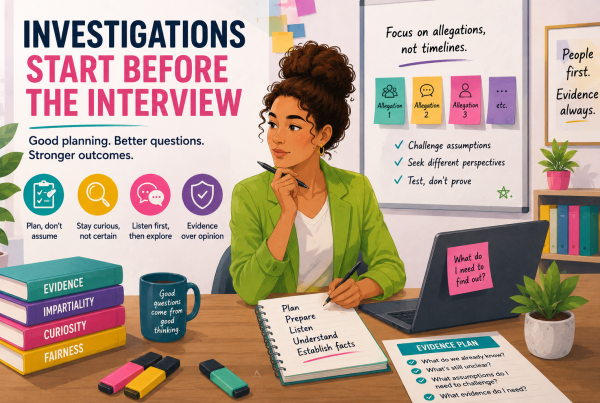
Before the meeting takes place, investigators should spend time properly reviewing the terms of reference, understanding exactly what allegations need to be explored, and identifying what information is already available.
That preparation matters because it shapes the quality of the questioning.
One practical tip that often makes a big difference is structuring your questions around each allegation rather than trying to work through events chronologically from beginning to end. Chronological conversations can easily drift off track, particularly in emotionally charged situations. Organising questions allegation by allegation helps investigators stay focused and ensures important areas are not missed.
The questioning style itself is equally important.
A good investigation meeting should feel professional, calm, and structured. It is not an interrogation, but it is also not a casual chat.
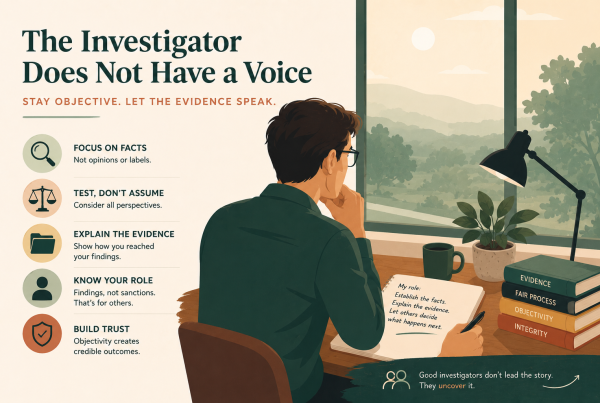
The role of the investigator is to gather facts, clarify information, and test evidence fairly.
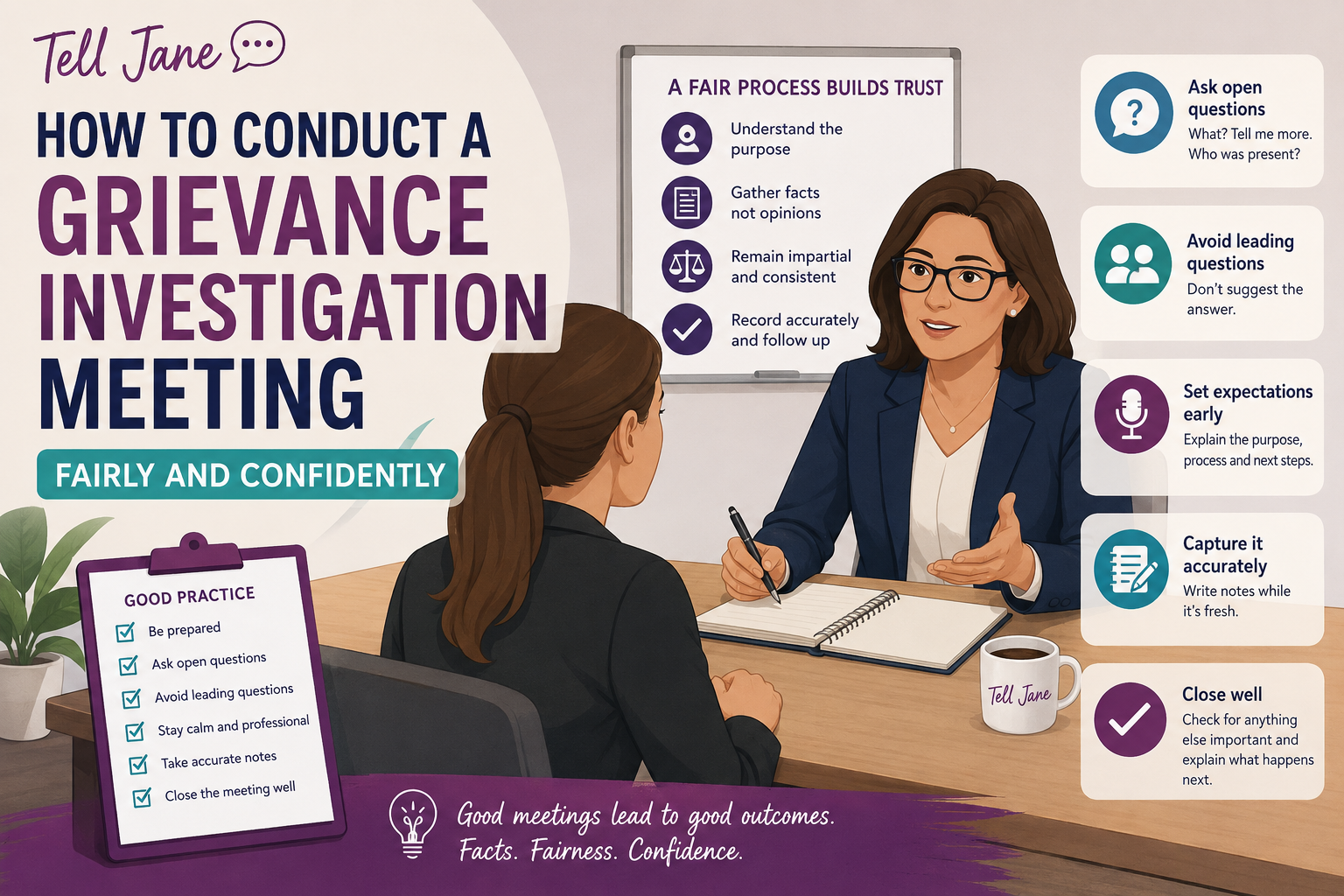
That means open questions are critical.
Questions like:
“Can you talk me through what happened?”
“Tell me more about that.”
“Who was present?”
“What was said?”
“What happened next?”
These types of questions encourage people to provide detail in their own words.
One of the most common mistakes investigators make is relying too heavily on “why” questions. While they can sometimes have a place, they often push people towards opinion, justification, or defensiveness rather than factual evidence.
For example:
“Why did you react like that?”
can quickly become emotional or argumentative.
Whereas:
“What was going through your mind at that point?”
or
“What happened immediately before that?”
is usually more effective and evidence focused.
Investigators also need to be very careful about leading questions.
Leading questions can unintentionally introduce bias into the process by suggesting the answer the investigator expects.
For example:
“You were upset because your manager embarrassed you in front of the team, correct?”
This question already assumes wrongdoing and encourages agreement.
A more balanced approach would be:
“How did you feel about the interaction?”
or
“How would you describe your manager’s approach during that meeting?”
The wording matters because investigations must remain fair and impartial throughout.
The start of the meeting is also important and often rushed.
A good preamble helps create clarity and professionalism from the outset. The individual should understand:
- the purpose of the meeting
- the investigator’s role
- how the information will be used
- whether notes or recordings are being taken
- who may see the information afterwards
- that the meeting forms part of a formal process
If the meeting is being recorded, permission should always be discussed clearly at the start.
This helps set expectations and reduces confusion later.
The tone matters too. People are often nervous in investigation meetings, particularly if they have never been involved in one before. Calmness, structure, and clarity from the investigator can make a significant difference to the quality of evidence gathered.
Closing the meeting properly is just as important as opening it well.
One of the simplest but most overlooked questions investigators can ask is:
“Is there anything else you feel is important for me to consider?”
That question often brings out information that has not emerged naturally during earlier questioning.
It is also important to check whether there are any extenuating circumstances or additional context the individual wants the investigator to understand before the meeting ends.
Before closing, investigators should explain what happens next, including likely timescales and any further steps in the process. Individuals should leave the meeting understanding what to expect rather than feeling uncertain or abruptly dismissed.
It can also be helpful to ask:
“Are you happy with how the meeting has been handled today?”
This is not about seeking approval for the investigation outcome. It is about checking whether the individual felt heard and able to participate properly in the process.
Finally, good note taking matters far more than many investigators realise.
Minutes should ideally be drafted while the meeting is still fresh, while detail and nuance can still be accurately recalled. Delays often lead to gaps, inconsistencies, or over summarised records.
Individuals should then have the opportunity to review and sign off the minutes so there is a clear and agreed record of the meeting.
Well run grievance investigation meetings are not about catching people out or proving a point. They are about gathering evidence fairly, professionally, and consistently so organisations can make informed decisions based on fact rather than assumption.
At Tell Jane, we support organisations with workplace investigations, investigator training, and grievance handling support to help leaders manage complex people issues fairly and confidently. Request a brochure to learn more about our work.