Trust Is Usually Lost Before The Findings Are Written
One of the things I have noticed after years of conducting workplace investigations is that people often use the word “bias” to describe experiences that have very little to do with bias.
When somebody says an investigation felt biased, they may be describing a process that lacked transparency, communication that felt poor or a first response that left them feeling dismissed. They may be describing inconsistency, unexplained delays or an investigator who appeared to have formed views too early. In many cases, what they are really describing is a loss of trust.
That distinction matters because organisations often respond to criticism of investigations by focusing on the findings. They revisit the evidence, defend the conclusions and explain why the outcome was reasonable. The difficulty is that trust is rarely lost when somebody reads the findings section of a report. More often, trust has been eroded gradually throughout the process, long before the outcome is known.
I think this misunderstanding exists because investigations are often viewed as technical exercises. We focus on evidence, findings and procedural fairness, which are all important. However, the people experiencing the investigation are often paying attention to something else entirely. They are forming views about whether they are being treated fairly, whether they understand what is happening and whether they believe the organisation is approaching the issue with an open mind.
Those perceptions begin forming much earlier than many organisations realise.
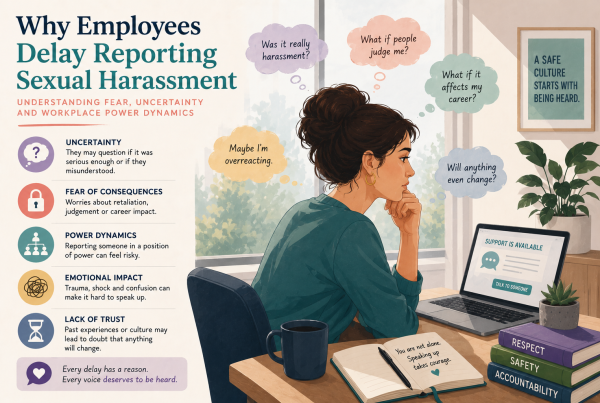
By the time an employee raises a concern, they have often spent a considerable amount of time deciding whether to speak up. They may have discussed the situation with family members, friends or trusted colleagues. They may have convinced themselves several times not to raise the issue before finally deciding they have little choice. The first response they receive therefore carries a great deal of weight, not because it determines the outcome, but because it tells them something about how the organisation is likely to approach the concern.
When that first response feels dismissive, defensive or rushed, trust can begin to weaken before an investigation has even started. The same is true when managers immediately begin explaining behaviour away, questioning motives or focusing on why something may not be as serious as it appears. Most managers are not trying to undermine trust when they respond in this way. They are often uncomfortable, uncertain or trying to solve the problem quickly. However, intentions and outcomes are not always the same thing, and employees will often judge the organisation by how they felt during that initial conversation rather than what the manager intended.
As the investigation progresses, communication becomes equally important.
One of the most common frustrations I hear from people involved in investigations is not knowing what is happening. The issue is rarely that every detail cannot be shared. Most people understand there are limits to what organisations can disclose. The problem usually arises when there is little communication at all. Weeks pass without updates, delays are not explained and decisions appear to happen behind closed doors. In the absence of information, people naturally start filling the gaps themselves.
That is where assumptions begin to take hold.
A delay becomes evidence that the organisation is not taking the issue seriously. A lack of updates becomes evidence that somebody is being protected. An unexplained decision becomes evidence that the outcome has already been determined. Whether those assumptions are accurate is almost beside the point. Once trust starts to disappear, people become increasingly likely to interpret uncertainty negatively.
This is one of the reasons I think transparency is often misunderstood. Transparency does not mean sharing every detail of an investigation. It means helping people understand the process, the reasons for decisions and what they can realistically expect. Organisations sometimes assume that because a process is fair, people will automatically experience it as fair. In practice, fairness that is not visible can be difficult for people to recognise.
The behaviour of the investigator also plays a significant role in shaping trust.
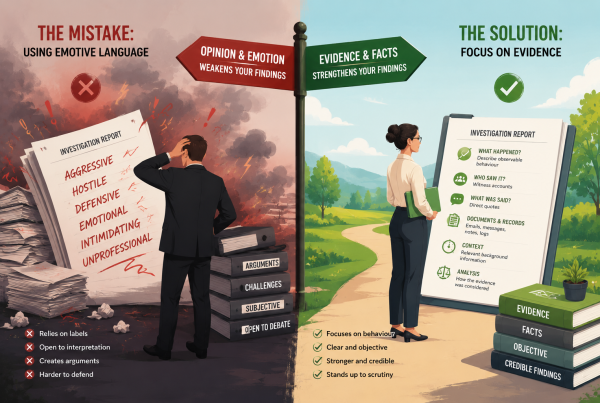
Investigators do not need to agree with somebody to make them feel heard. They do not need to accept an allegation to demonstrate that they are taking it seriously. Equally, they do not need to reassure somebody that they will achieve a particular outcome in order to build confidence in the process. What people are often looking for is evidence that the investigator is genuinely interested in understanding what happened rather than defending a particular position.
That sounds obvious, but people are remarkably sensitive to the signals investigators send. They notice whether questions feel genuinely exploratory or whether they seem designed to support a particular narrative. They notice whether difficult issues are approached with curiosity or scepticism. They notice whether explanations are clear or evasive. Over time, these interactions shape how the investigation is experienced, regardless of what the eventual findings say.
The same principle applies to consistency.
Organisations often focus on whether a particular investigation was handled correctly, but employees rarely assess investigations in isolation. They compare what they are experiencing with what they have seen happen in the past. They notice when similar concerns appear to receive different responses. They notice when some individuals seem to receive more support, information or protection than others. They notice when organisational values are spoken about confidently but applied inconsistently.
None of these things determine whether an allegation is upheld. However, they all influence whether people trust the process.
That is why I have come to believe that trust is not primarily built through findings. Findings matter, particularly when investigations are complex and outcomes are contested, but most people make up their minds about the credibility of a process long before they reach the final pages of a report. They do so through hundreds of small observations about how concerns are handled, how people are treated and whether the organisation behaves in a way that reflects the standards it claims to uphold.
The organisations that maintain trust during difficult investigations are rarely those that avoid complaints about outcomes. Disagreement is inevitable whenever people care deeply about the issues involved. What distinguishes these organisations is that they understand investigations are not only exercises in evidence gathering. They are also experiences that communicate something about the culture of the organisation itself.
When people say they do not trust an investigation, they are often telling us something much broader than whether they agree with the findings. They are telling us whether they felt respected, informed, listened to and treated fairly throughout the process. In my experience, that is where trust is usually won or lost.
At Tell Jane, we support organisations with complex workplace investigations, culture reviews and investigator training. Our focus is not only on helping organisations reach robust findings, but on creating processes that people trust. If you’d like support with a workplace investigation or strengthening confidence in your investigation process, we’d be happy to help.