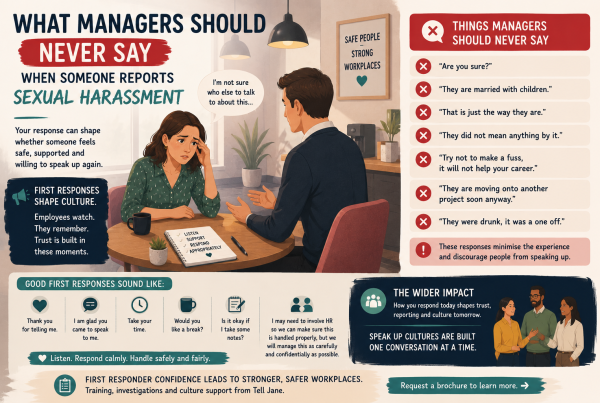
One of the most pressing concerns for individuals considering making a complaint is whether their report will be kept confidential. This blog explores the question, “Are sexual harassment complaints confidential?” We will delve into what confidentiality means, the difference between confidentiality and anonymity, and offer guidance for both employees contemplating a complaint and HR professionals tasked with managing these sensitive situations.
Are sexual harassment complaints confidential?
The short answer is yes—sexual harassment complaints are generally treated as confidential. However, understanding what confidentiality means in practice is essential.
Confidentiality in the context of a sexual harassment complaint means that the details of the complaint are disclosed only to those who need to know in order to investigate and address the issue. This typically includes HR professionals, legal advisors, and possibly the accused, depending on the circumstances of the investigation.
In the UK, employers have legal obligations under the Equality Act 2010 to address harassment in the workplace, which includes handling complaints with confidentiality. However, while confidentiality is a key aspect of this process, it is not absolute. There may be circumstances where confidentiality must be balanced against the need to take action, especially if the complaint reveals broader workplace issues or illegal activities.
Confidentiality vs. Anonymity: what’s the difference?
When asking, “Are sexual harassment complaints confidential?” it’s important not to confuse confidentiality with anonymity. Although they are related, they are not the same thing.
- Anonymity means that the identity of the complainant is not disclosed, even to those investigating the complaint. This can make it challenging to investigate the complaint thoroughly, as essential details may be missing or uncorroborated.
- Confidentiality, on the other hand, involves sharing the complainant’s identity and details of the complaint only with individuals who need to know to resolve the issue. While confidentiality seeks to protect the complainant’s privacy, it does not mean that their identity is completely hidden.
A common misconception is that a confidential complaint is also anonymous. However, in most cases, the person investigating the complaint will need to know the identity of the complainant to ensure a fair and thorough investigation. Thus, while confidentiality aims to protect privacy, it doesn’t provide the same level of identity protection as anonymity.
The importance of confidentiality in encouraging reporting
Confidentiality plays a vital role in encouraging employees to report sexual harassment. When individuals feel confident that their complaint will be handled discreetly and sensitively, they are more likely to come forward. Employers should clearly communicate their commitment to confidentiality as part of their reporting process.
However, confidentiality has its limitations. For instance, if a complaint indicates a pattern of behaviour affecting multiple employees or involves illegal actions, the employer may be legally required to take steps that could involve wider disclosure of the complaint details. Employers must carefully balance the need to maintain confidentiality with their responsibility to ensure a safe and lawful workplace.
Guidance for employees considering a complaint
If you’re thinking about making a sexual harassment complaint, understanding the role of confidentiality is crucial.
- What to expect: Once you make a complaint, your information will be shared only with those necessary for addressing the issue. This includes HR professionals or investigators who are bound by confidentiality obligations.
- Questions to ask: Clarify how your complaint will be handled by asking: Who will know about my complaint? What specific information will be shared? What happens if confidentiality is breached?
- Balancing concerns and rights: While it’s natural to be concerned about privacy, it’s important to weigh this against the need to resolve the issue effectively. Understanding that confidentiality will be maintained to the extent possible can help in making an informed decision.
Guidance for HR professionals handling complaints
For HR professionals, maintaining confidentiality is key to managing sexual harassment complaints effectively.
- Best practices for maintaining confidentiality: Clearly communicate with the complainant about what confidentiality entails. Limit access to complaint information to only those directly involved in the investigation.
- Handling requests for anonymity: If a complainant requests anonymity, consider whether the complaint can still be investigated effectively. Be transparent about the limitations of anonymity and its impact on the investigation process.
- Ensuring fair and thorough investigations: While maintaining confidentiality, ensure that your investigation is comprehensive. Proper documentation and a well-organised process are essential to upholding both fairness and confidentiality.
So, are sexual harassment complaints confidential? Yes, they generally are, but confidentiality has its limitations. Understanding the difference between confidentiality and anonymity is crucial for both employees considering making a complaint and HR professionals managing the process. Confidentiality encourages reporting and protects the complainant’s privacy, but it must be balanced with the need for a thorough and effective investigation.
Tell Jane offers bespoke sexual harassment workshops for organisations of any size, if you’re interested in investing in a programme with tangible results, contact us directly by emailing hello@telljane.co.uk