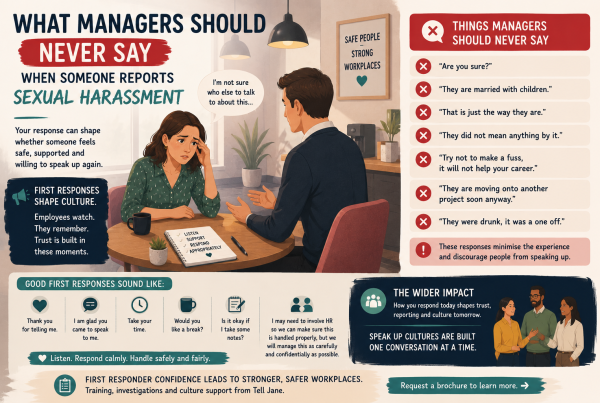
Sexual harassment at work remains a serious issue in UK workplaces. It disproportionately affects women and the LGBTQIA community but can target anyone. According to the 2024 Skills and Employment Survey led by UCL, women were nearly twice as likely as men to experience workplace abuse in the past year, and LGBTQ workers reported sexual harassment at more than three times the rate of their heterosexual colleagues (ucl.ac.uk).
Too often, the conversation sidelines men, leaving them feeling alienated or blamed, or unsure of how to act. This article looks at why male allyship matters, how HR can support it with clarity and confidence, and practical steps organisations can take to build workplaces where everyone feels safe and respected.
Why male allyship matters
- Bystanders can prevent harassment before it escalates
- Male allies support those most at risk, particularly women and LGBTQIA staff
- Demonstrates organisational commitment to respect and inclusion
- Avoids the assumption that victims will always report incidents
Bystanders have the power to stop harmful behaviour early. What may start as a comment, a joke or a micro-aggression can grow into something more serious. When men engage as allies, inappropriate behaviour is more likely to be challenged and prevented from becoming systemic.
Male allyship also supports those most at risk. As the UCL survey shows, women and LGBTQ workers experience harassment more frequently. When men step into their role as allies, it sends a clear message that everyone is responsible for creating a safe workplace.
Finally, allyship shows that the organisation is committed to respect and inclusion. When supported by policy, training and culture, allyship becomes part of the workplace DNA and strengthens trust and psychological safety.
A common pitfall is assuming that if a complaint is serious, the victim will report it. Many incidents go unreported, and when bystanders stay silent, harassment can persist unchecked.
The impact of silence and inaction
- Harassment continues unchecked when colleagues do nothing
- Trust in HR and leadership declines if complaints are ignored
- Legal, reputational and cultural risks increase for the organisation
- Bystanders can play a key role in reducing grievances and complaints
When colleagues do nothing, the consequences affect both individuals and the wider organisation.
Harassment that goes unchallenged can normalise disrespect and create a culture where inappropriate behaviour is tolerated. Trust in HR and leadership declines if people feel complaints will not be taken seriously or fear being dismissed or blamed (workplacejournal.co.uk).
Legal and reputational risks also increase. Unchecked harassment can lead to grievances, complaints, legal claims, reputational damage and a toxic environment that drives turnover, lowers morale and increases absenteeism.
Practical steps HR can take to encourage allyship
- Include allyship in induction and training from day one
- Provide clear reporting channels for witnesses, including confidential options
- Recognise and reinforce ally behaviour regularly
- Use mentoring and leadership role modelling to normalise allyship
- Embed allyship in ongoing culture initiatives, not as a one-off
HR leaders can take concrete steps to build male allyship into the organisation. Training should cover spotting harassment, intervening appropriately and supporting victims. Reporting should be clear and accessible for witnesses. Recognising and reinforcing ally behaviour helps make respect part of everyday culture. Mentoring and leadership role modelling can provide guidance and normalise allyship, and embedding it in ongoing initiatives ensures it is sustained rather than a one-off effort.
Avoid treating allyship as a tick box or blaming men. If it is handled poorly, it can create resentment or disengagement rather than involvement.
Policy, training and culture initiatives that work
- Role play in training to practice responding as a bystander
- Mentoring and buddy systems for safe discussion and support
- Leadership communications that reinforce allyship expectations
- Culture audits to identify risk points and behavioural norms
- Clear and consistent consequences for misconduct and bystander inaction
Some initiatives help allyship thrive in practice. Using realistic scenarios in training helps staff recognise harmful behaviour and practise responding as bystanders. Mentoring and buddy systems create safe spaces for discussion and support. Leadership should communicate allyship expectations clearly. Culture audits can highlight risk points and norms that need attention. And addressing misconduct consistently reinforces that allyship is expected and valued.
Practical takeaways
- Do include allyship in induction, training and ongoing culture work rather than treating it as an afterthought
- Do provide clear, safe reporting channels for witnesses and maintain confidentiality
- Do encourage mentoring, leadership modelling and peer support for ally behaviours
- Don’t treat allyship as a tick box or blame men for harassment
- Don’t assume harassment only affects women or minorities. Everyone has a role in creating a respectful workplace
Quick checklist for HR to act on today:
- Review harassment and conduct policy to include bystander responsibility
- Add a module on bystander intervention to training and induction
- Promote anonymous and confidential reporting options for witnesses
- Encourage leaders to speak publicly about allyship
- Plan a culture review to assess norms, behaviours and risk points
Supporting male allies is central to preventing sexual harassment and building trust in the workplace. By embedding allyship into policy, training and culture, HR can create an environment where everyone feels respected and safe.
Tell Jane can help HR leaders develop training, run culture reviews and put systems in place that support allies and prevent harassment. Explore our services to see how we can help your organisation build a safer, more respectful workplace or email us at hello@telljane.co.uk