Most workplace issues do not start with a formal complaint. They start with something small. A comment that lands badly. A tension in a meeting. A pattern of behaviour that does not feel quite right.
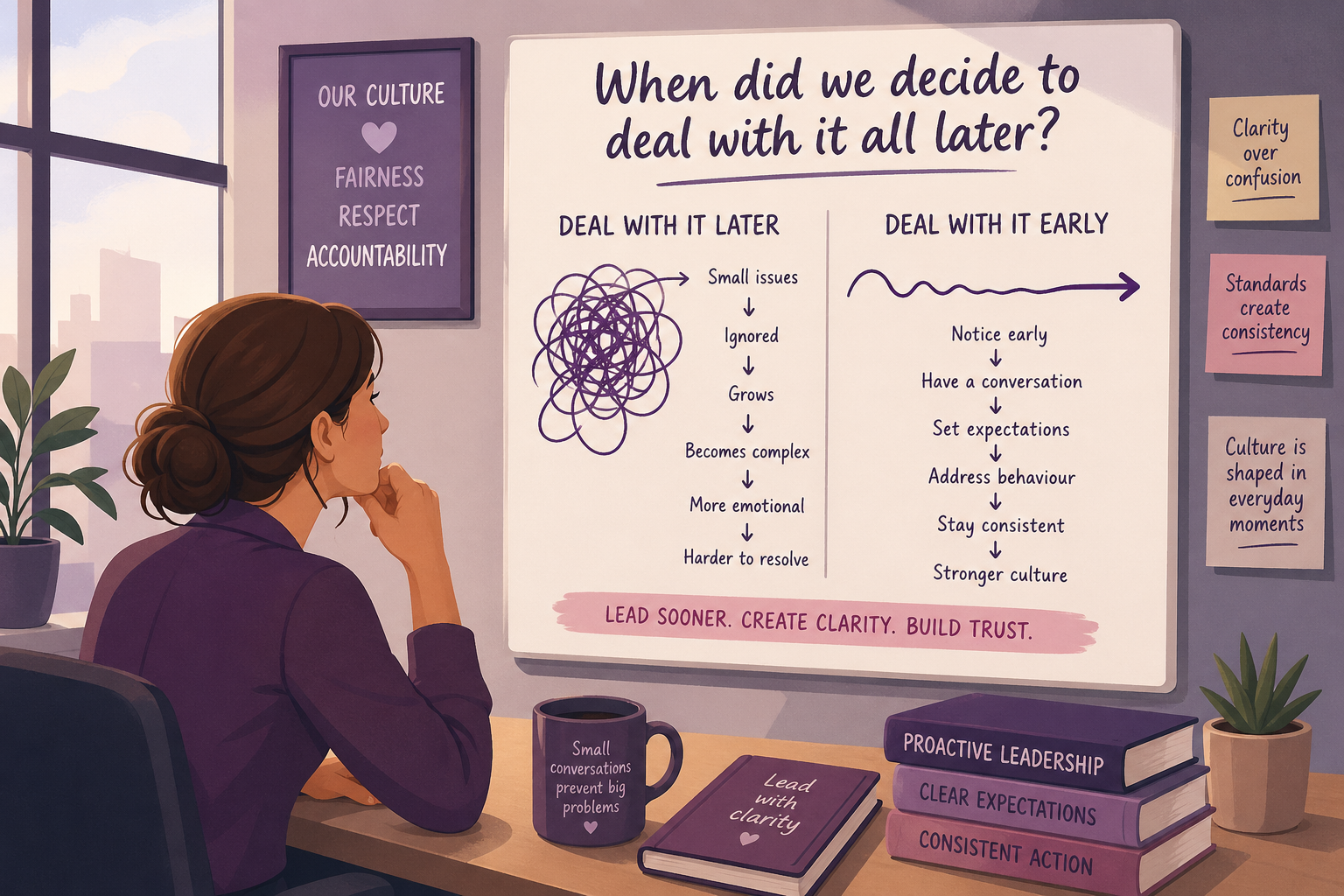
Leaders notice these moments. They sense when something is drifting. But very often, nothing happens straight away. Not because people do not care, but because they are busy, unsure, or hoping the situation will settle on its own. Over time, what could have been addressed early becomes more complicated, more emotional, and harder to resolve. That is the real cost of dealing with things later.
There is another shift happening in the background that makes this more important than ever. In the UK, protection from unfair dismissal used to begin after one year of service. It then moved to two years. Now it is moving to six months. That change is not just about employment law. It changes the pace at which leaders need to act.
For a long time, organisations had a sense of breathing space. There was time to observe behaviour, to see whether performance improved, or to give someone the benefit of the doubt. That buffer is getting shorter. Leaders are being asked to make decisions earlier in the employment relationship and to set expectations more clearly from the start. The system is moving faster, whether we feel ready for it or not.
The uncomfortable question is whether our leadership capability has kept pace with that change. Have we relied on time to manage problems instead of clarity? Have we allowed standards to drift because the consequences felt further away? In some organisations, I do think we have become a little more relaxed about behaviour than we should have been. Not deliberately, but gradually. Small issues get tolerated. Boundaries become less clear. Expectations become inconsistent.
This is not usually a knowledge problem. Most leaders know when something is not right. They can feel it. They see the shift in mood in a team or the frustration building between colleagues. What often holds them back is confidence. Confidence to step in early. Confidence to have a direct conversation. Confidence that they are acting fairly.
So they wait. And waiting feels reasonable in the moment. It feels measured and calm. But over time, waiting is what allows problems to take hold. Behaviour that is not challenged becomes normalised. Expectations become blurred. By the time action is taken, the issue has already grown.
That is why clarity about culture matters so much. Not the kind of culture that sits on a poster or in a strategy document, but the kind that shows up in everyday behaviour. A culture that is simple enough for people to understand and clear enough for leaders to apply.
One of the tests I often suggest to organisations is this. If you asked employees to describe the culture to their friends or family, what would they say? Not what is written on the website, but what they actually experience day to day. Would they talk about fairness, respect, and accountability? Or would they talk about inconsistency, avoidance, or frustration?
Culture should be something people can explain in plain language. It should be obvious what acceptable behaviour looks like and equally obvious what is not acceptable. When that clarity exists, leaders have a solid foundation to hold people to account. Without it, decisions start to feel subjective and inconsistent.
Different leaders will always have different styles, and that is healthy. Some are more direct, some more reflective, some more structured. But the experience of working in the organisation should not depend entirely on who your manager is. There needs to be a golden thread that runs through the organisation so that employees feel a consistent level of fairness and respect wherever they sit.
When that thread is missing, differences between teams become more noticeable. One department deals with behaviour quickly, while another lets issues linger. One leader sets clear boundaries, while another avoids difficult conversations. Over time, those differences start to feel like unfairness. And unfairness is what drives complaints, conflict, and disengagement.
It is also important to recognise the pressure managers are under. Expectations of leaders have grown significantly in recent years. They are being asked to manage performance, support wellbeing, handle conflict, maintain engagement, and understand increasingly complex employment law. All while delivering results and keeping teams moving.
Many managers are not avoiding action because they do not care. They are delaying because they feel stretched or uncertain about how to respond. They want to get it right. They want to be fair. But without clear expectations and consistent support, hesitation becomes the default.
This is where proactive leadership comes into play. Not in a dramatic way, but in everyday moments. Addressing behaviour early. Setting expectations clearly. Following up when standards slip. Having honest conversations before problems escalate. These actions are not complicated, but they do require confidence and consistency.
If you look across your organisation today, it is worth asking a simple question. Do your teams feel broadly similar in their experience of leadership and behaviour? Or do some areas feel very different from others? That difference does not automatically mean one team is better or worse, but it can be a signal that expectations are not fully aligned.
Consistency is what holds culture together. It creates predictability. It builds trust. It makes it easier for leaders to act because the standards are clear and shared.
The organisations that manage workplace behaviour well are not the ones with the longest policies. They are the ones where leaders feel confident to act early and apply standards consistently. They recognise that culture is shaped through everyday decisions, not formal processes.
Waiting will always feel easier in the moment. It avoids conflict. It buys time. It keeps things calm, at least temporarily. But delay is often what creates the very problems organisations are trying to avoid.
The real shift we need to make is not legal or procedural. It is behavioural. Moving from hoping things will settle to addressing them early. From reacting later to leading sooner.
At Tell Jane, we help organisations build the confidence and capability to address workplace issues early, before they escalate and affect culture, performance or trust.