An investigation is typically required when:
- A formal complaint or grievance is raised.
- There are allegations of misconduct or breaches of policy.
- Concerns are raised about discrimination, harassment, or bullying.
- Whistleblowing reports highlight serious wrongdoing.
Not every issue requires a full investigation. For minor concerns, informal resolutions such as mediation or coaching may be more appropriate. However, for serious allegations, an investigation is often the only way to ensure fairness and compliance.
The workplace investigation process
While every organisation may have its own procedures, most workplace investigations follow these key steps:
1. Receiving the complaint
The process begins when a complaint, grievance, or report of misconduct is received. This could be formal or informal, written or verbal. HR must decide whether an investigation is necessary based on the severity and nature of the issue.
2. Appointing an investigator
The investigator could be an internal HR professional, a manager, or an external expert.. The key requirement is impartiality—there should be no conflicts of interest that could compromise the fairness of the investigation.
3. Planning the investigation
The investigator outlines the scope and objectives of the investigation, identifying key individuals to interview, evidence to collect, and timelines to follow. A clear plan ensures the process remains focused and efficient.
4. Collecting evidence
Evidence can include:
- Witness statements from employees.
- Emails, messages, or other written communications.
- CCTV footage or access logs.
- Relevant policies or procedures.
The investigator must ensure all evidence is gathered lawfully and kept confidential.
5. Conducting interviews
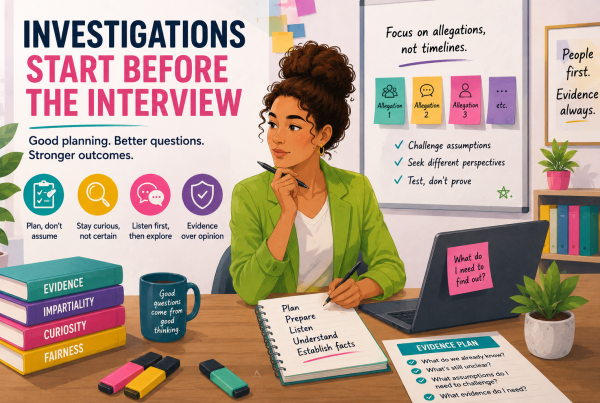
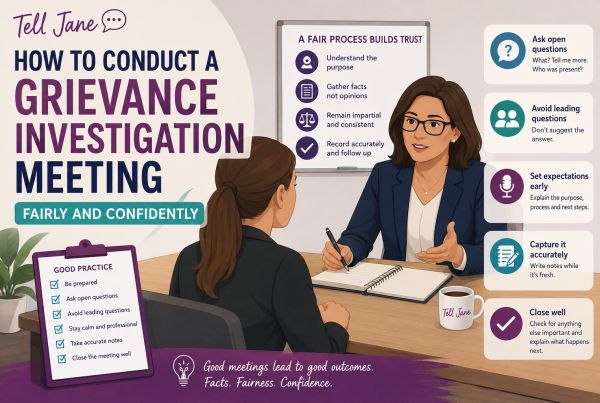
Interviews are conducted with the complainant, the accused, and any witnesses. The investigator asks open-ended, non-leading questions to gather accurate information.
6. Analysing findings
Once all evidence and statements are collected, the investigator reviews the information to identify patterns, inconsistencies, or corroborations.
7. Producing a report
The investigator compiles their findings into a report, summarising the evidence and providing conclusions. This report is used to determine the next steps, such as disciplinary action or training.
8. Taking action
Based on the investigation’s findings, the organisation may:
- Take disciplinary action against the accused.
- Offer support or training to those involved.
- Update policies or procedures to prevent future issues.
Key considerations for UK workplace investigations
In the UK, workplace investigations must comply with employment laws and best practices, including:
- The ACAS Code of Practice: This outlines fair procedures for handling grievances and disciplinary matters.
- Confidentiality: Protecting the privacy of those involved is crucial to maintaining trust.
- Impartiality: Investigators must remain unbiased to ensure a fair process.
- Timeliness: Delays can undermine the credibility of an investigation and increase risks for the organisation.
Why workplace investigations matter
A well-conducted workplace investigation not only resolves issues but also helps foster a culture of fairness, accountability, and respect. By addressing problems transparently and effectively, organisations can:
- Build trust with employees.
- Reduce the risk of legal claims or tribunals.
- Maintain a positive workplace culture.
Final thoughts
Workplace investigations are a vital part of managing employee relations and ensuring compliance with UK employment law. By following a structured and fair process, HR professionals can address issues effectively, protect all parties involved, and safeguard their organisation’s reputation.
If you’re faced with a workplace issue and need guidance, consider seeking expert support to ensure your investigation is handled professionally and impartially.
At Tell Jane, we can support your organisation in conducting fair and impartial workplace investigations through training in-house investigations or carrying out investigations on your behalf.
Email us today at hello@telljane.co.uk to find out more.