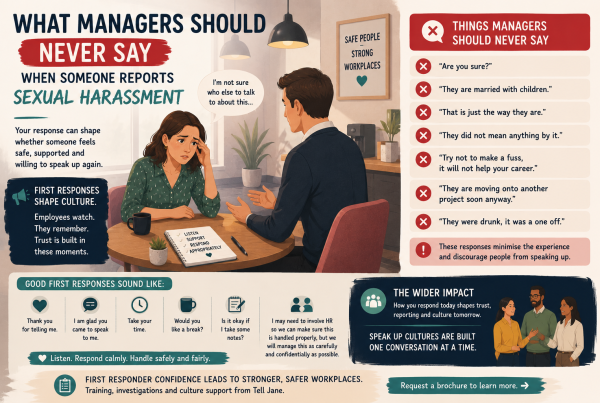
Sexual harassment programs are designed to create safer and more inclusive workplaces. However, some initiatives inadvertently fail or even exacerbate the problem they aim to solve. For UK employers, understanding why these programs sometimes backfire is crucial to implementing effective, meaningful solutions.
Common reasons sexual harassment programs backfire
- One-size-fits-all approaches Programs that fail to account for the specific needs and dynamics of individual workplaces often miss the mark. A generic approach may not address unique organisational cultures or the lived experiences of employees.
Solution: Tailor training and policies to reflect your organisation’s structure, culture, and workforce diversity. - Focus on legal compliance over cultural change Programs centred solely on ticking boxes to meet legal requirements risk being perceived as superficial or insincere. This can breed cynicism among employees and undermine the program’s credibility.
Solution: Shift the focus from compliance to fostering a genuinely inclusive and respectful culture. - Insufficient leadership involvement When leaders are not actively engaged, employees may doubt the organisation’s commitment to addressing harassment. This can create an environment where inappropriate behaviour continues unchecked.
Solution: Ensure leaders model the desired behaviours and participate visibly in training and initiatives. - Overemphasis on punitive measures Programs that overly focus on punishment can create fear rather than encouraging open dialogue. Employees may hesitate to report incidents, fearing severe repercussions for themselves or their colleagues.
Solution: Balance accountability with restorative practices that promote understanding and change. - Ineffective training methods Relying on outdated, lecture-style training sessions can lead to disengagement. Employees may view these sessions as boring, irrelevant, or even patronising.
Solution: Use interactive, scenario-based training that engages employees and applies to real-world situations. - Tone lacking allyship Training or programs that come across as accusatory or blaming can alienate employees, particularly those who may not see themselves as part of the problem. This tone can hinder engagement and reduce the effectiveness of the initiative.
Solution: Frame content from a perspective of allyship and shared responsibility. Include practical advice on what employees can do if they witness or experience harassment, fostering a sense of collective accountability and support.
The importance of employee buy-in
For any sexual harassment program to succeed, employees must feel it is designed for their benefit, not merely as a tool to protect the organisation. Lack of trust or belief in the program’s efficacy can undermine its impact.
How to foster employee buy-in:
- Involve employees in the design and rollout of initiatives.
- Regularly solicit feedback to refine programs.
- Demonstrate transparency in handling complaints and implementing solutions
Building a sustainable solution
To avoid the pitfalls of ineffective programs, UK employers should focus on long-term strategies that address the root causes of harassment rather than short-term fixes. Here are some actionable steps:
- Conduct workplace assessments Understand your organisation’s unique challenges by gathering data through surveys, focus groups, and incident reports.
- Develop a clear, comprehensive policy Ensure your sexual harassment policy outlines acceptable behaviours, reporting mechanisms, and consequences for violations.
- Provide ongoing training Move beyond annual sessions to create a culture of continuous learning and awareness.
- Create safe reporting channels Establish multiple avenues for employees to report incidents confidentially and without fear of retaliation.
- Monitor and evaluate programs Regularly assess the effectiveness of your initiatives and make adjustments based on feedback and outcomes.
Sexual harassment programs don’t have to backfire. By understanding the common reasons for failure and taking proactive, tailored steps, UK employers can create meaningful change. It’s not just about preventing harassment—it’s about fostering a workplace culture where everyone feels safe, valued, and respected.
If you’re ready to implement effective sexual harassment prevention programs, our HR consultancy can help. Contact us today to learn how we can support your organisation in creating lasting, positive change.
You can email hello@telljane.co.uk for a brochure.