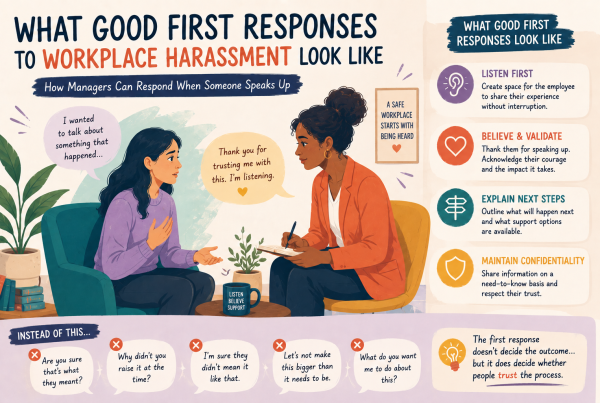
Discrimination in the workplace can be obvious or it can be subtle, sometimes just a pattern of exclusion or repeated microaggressions. When someone raises a concern, how you respond speaks volumes. It says whether their experience matters and whether your organisation takes fairness seriously.
Investigating discrimination isn’t the same as a standard workplace complaint. It requires thoughtfulness, sensitivity, and legal awareness, plus a careful approach to protect everyone involved. In this article, I’ll cover the key considerations that make discrimination investigations different, and why getting them right matters for both your people and your organisation.
Understanding the legal framework
The Equality Act 2010 is at the heart of discrimination investigations. It protects people from unfair treatment based on characteristics like age, sex, race, disability, religion, sexual orientation, gender reassignment, pregnancy and maternity, and marriage or civil partnership.
A few things to keep in mind:
- Discrimination can be direct or indirect. A single comment might seem minor, but repeated patterns or systemic exclusion can amount to unlawful treatment.
- Microaggressions, bias in processes, or unfair allocation of opportunities are often at the heart of complaints.
- Investigators need to approach cases with awareness of these subtleties to avoid missing the bigger picture.
Understanding the law ensures your investigation is both fair and defensible.
Preparing for a sensitive investigation
Preparation is key. Discrimination complaints often involve strong emotions and, in some cases, trauma. A few practical points:
- Who investigates matters: Choose someone neutral and independent from the situation, ideally with experience handling discrimination complaints. People need to trust that the process is fair.
- Think about impact: Recounting incidents can be distressing. Schedule interviews thoughtfully, allow breaks, and offer support or the presence of a colleague or union rep if requested.
- Set expectations: Explain the process clearly, including what confidentiality means and who will see the information. Being upfront builds trust and reassures people that the complaint is taken seriously.
Interviewing without causing further harm
The way interviews are conducted is critical. People need to feel safe sharing their experience.
- Focus on facts, not intent: Discrimination can happen even when someone didn’t intend harm. Ask what happened, when, and how it affected the person.
- Be sensitive in language: Avoid confronting or accusatory phrasing. Use neutral, open questions.
- Witnesses: Approach carefully, explain their role, and encourage factual input. Some may be hesitant to speak up if they fear repercussions.
- Support options: Offer access to HR, an employee representative, or someone to support the interviewee emotionally.
The goal is to get an accurate picture without adding stress or undermining trust.
Documenting findings and protecting confidentiality
Documenting a discrimination investigation is about more than just noting what happened. It’s about context, patterns, and fairness.
- Capture patterns, not just incidents: Discrimination often builds over time. Context is critical.
- Keep information on a need-to-know basis: Limit access to investigation notes to protect confidentiality and prevent further harm.
- Link evidence to protected characteristics: When appropriate, highlight how behaviour relates to the protected characteristic.
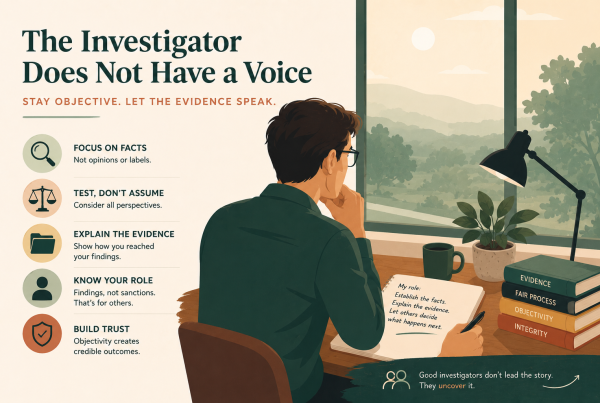
- Be objective: Avoid assumptions about intent. The focus should be on what happened and its impact.
Good documentation not only helps you make fair decisions, it also protects your organisation legally and demonstrates integrity to everyone involved.
Practical takeaways
Investigating discrimination requires care, skill, and attention. Keep these points front of mind:
- Choose the right investigator, someone independent, credible, and experienced.
- Be trauma aware, plan interviews carefully and offer support.
- Look for patterns and context, discrimination is often subtle and repeated.
- Keep information confidential, protect people while gathering what you need.
- Focus on facts, not assumptions, let the evidence guide your decisions.
Discrimination investigations require thoughtfulness, fairness, and careful attention to detail. Done well, they protect your people, reinforce trust, and safeguard your organisation’s reputation and compliance.
If you need support with a sensitive discrimination case or advice on creating fair and robust processes, explore our disciplinary investigations service or get in touch. Email Tell Jane today.