A workplace investigation is a formal process undertaken by an organisation to examine complaints, allegations, or incidents that may involve misconduct, policy violations, or illegal activities within the workplace. This process is crucial for maintaining a fair, safe, and compliant work environment.
The importance of workplace investigations
Workplace investigations are essential for several reasons:
- Ensuring fairness: They help ensure that all employees are treated fairly and that any allegations of misconduct are taken seriously and investigated thoroughly.
- Maintaining a safe work environment: Investigations help identify and address behaviours or situations that may compromise the safety and well-being of employees.
- Compliance with laws and regulations: Conducting thorough investigations helps organisations comply with employment laws and regulations, potentially avoiding legal consequences.
- Protecting company reputation: Properly addressing and resolving issues can protect an organisation’s reputation and build trust among employees and stakeholders.
- Preventing future incidents: Identifying the root cause of an issue and addressing it can prevent similar incidents from occurring in the future.
When is a workplace investigation necessary?
Workplace investigations are typically initiated under the following circumstances:
- Allegations of harassment or discrimination: Complaints related to sexual harassment, racial discrimination, or any form of bullying.
- Misconduct: Instances of fraud, theft, or violations of company policies.
- Health and safety violations: Situations where workplace safety has been compromised, leading to potential harm.
- Employee grievances: Formal complaints from employees regarding unfair treatment or hostile work environments.
- Compliance issues: Situations where there may be breaches of legal or regulatory requirements.
Steps in a workplace investigation
A well-conducted workplace investigation follows a systematic process to ensure thoroughness and fairness:
- Initiation: The process begins with the receipt of a complaint or report of an incident. This can come from an employee, a manager, or through anonymous channels.
- Planning: The organisation decides on the scope of the investigation, the key issues to be addressed, and who will conduct the investigation. This might involve internal HR personnel or external investigators.
- Gathering information: This step involves collecting all relevant information, including documents, emails, and other records. Interviews with the complainant, the accused, and any witnesses are conducted.
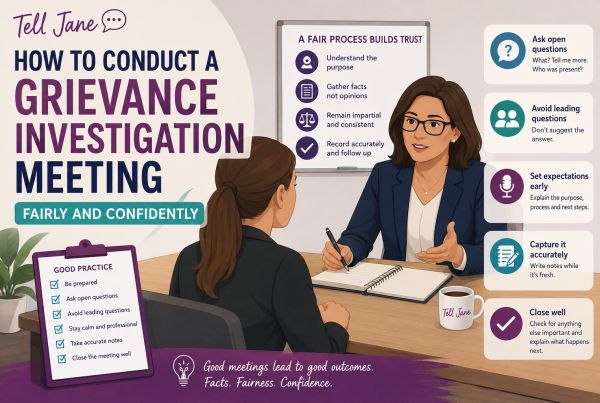
- Interviewing: Conducting interviews is a crucial part of the investigation. Interviewers should ask open-ended questions, listen carefully, and take detailed notes. Ensuring confidentiality and creating a comfortable environment for interviewees is vital.
- Analysis: Investigators analyse the collected information to determine what happened. They look for inconsistencies, corroborate stories, and weigh the credibility of the evidence.
- Conclusion: Based on the analysis, investigators reach a conclusion about whether the allegations are substantiated. They document their findings and provide recommendations for action.
- Reporting: A final report is prepared, detailing the investigation process, findings, and recommended actions. This report is shared with the appropriate decision-makers within the organisation.
- Action: The organisation takes appropriate action based on the findings. This might include disciplinary measures, policy changes, training, or other corrective actions.
- Follow-up: After the investigation, it is important to follow up to ensure that the recommended actions have been implemented and that the issue has been resolved. Regular monitoring may be necessary to prevent recurrence.
Best practices for conducting workplace investigations
- Impartiality: Ensure that the investigation is conducted by someone who is impartial and has no vested interest in the outcome.
- Confidentiality: Maintain confidentiality to protect the privacy of all involved and to encourage honesty during interviews.
- Thorough documentation: Keep detailed records of every step in the investigation process, including all evidence gathered and interviews conducted.
- Timeliness: Conduct the investigation promptly to address the issue swiftly and to minimise its impact on the work environment.
- Clear communication: Keep all parties informed about the progress of the investigation and its outcome.
Workplace investigations are a critical tool for maintaining a respectful, safe, and legally compliant work environment. By addressing complaints and allegations thoroughly and fairly, organisations can foster a culture of trust and accountability, ultimately enhancing overall workplace morale and productivity.
At Tell Jane, we can support your organisation in conducting fair and impartial workplace investigations through training in-house investigations or carrying out investigations on your behalf.
Email us today at hello@telljane.co.uk to find out more