Sexual harassment in the workplace often occurs in situations where the lines between social and professional environments become blurred. These situations can create opportunities for inappropriate behaviour to surface. Here are 10 examples of when sexual harassment typically occurs:
1. Social events (Christmas or Summer parties)
Work-related social events, such as Christmas or summer parties, often involve alcohol and a more relaxed atmosphere, which can lead to sexual harassment. For example, a colleague might make unwanted advances or inappropriate comments during these gatherings.
2. Team building activities
Off-site team-building activities can foster a less formal environment, sometimes leading to behaviour that wouldn’t occur in the office. This might include making sexually suggestive jokes or engaging in unwanted physical contact, resulting in sexual harassment.
3. Business trips
During business trips, the boundaries between work and personal time can blur. Sharing accommodations, extended periods together, and social dinners can lead to situations where inappropriate advances or propositions are made, leading to sexual harassment.
4. Work dinners or lunches
Business lunches or dinners, especially those involving alcohol, can create an informal setting where some employees might feel emboldened to make unwanted advances or inappropriate comments, contributing to sexual harassment.
5. After-hours work events
Events such as after-hours drinks or gatherings can lead to a relaxed atmosphere where professional boundaries are crossed, and sexual harassment can occur.
6. Company retreats
Company retreats often combine work with leisure activities, creating situations where employees might behave inappropriately, such as making advances or engaging in unwanted physical contact, leading to sexual harassment.
7. Office celebrations
Celebrations for birthdays, promotions, or project completions often involve socialising and can lead to situations where inappropriate behaviour occurs, such as making lewd jokes or comments, resulting in sexual harassment.
8. In the office during off-hours
Working late or during off-hours, when fewer people are around, can sometimes lead to sexual harassment, such as making inappropriate comments or unwanted physical contact when there are no witnesses.
9. Online social interactions
With the rise of remote work, virtual social interactions on platforms like Slack or Zoom can also become venues for sexual harassment, such as sending sexually suggestive messages or making inappropriate comments in chats.
10. Casual Fridays
On more casual dress days, like Casual Fridays, some employees might feel emboldened to make inappropriate comments about a colleague’s appearance or engage in behaviour that crosses professional boundaries, contributing to sexual harassment.
Addressing sexual harassment in blurred social-work situations
To effectively address and prevent sexual harassment in these situations, employers should:
- Clear guidelines for social events: Set clear expectations for behaviour at work-related social events, including guidelines on alcohol consumption and appropriate conduct to prevent sexual harassment.
- Training and awareness: Regularly conduct training sessions to educate employees on recognising and preventing sexual harassment, emphasising that these standards apply to all work-related settings.
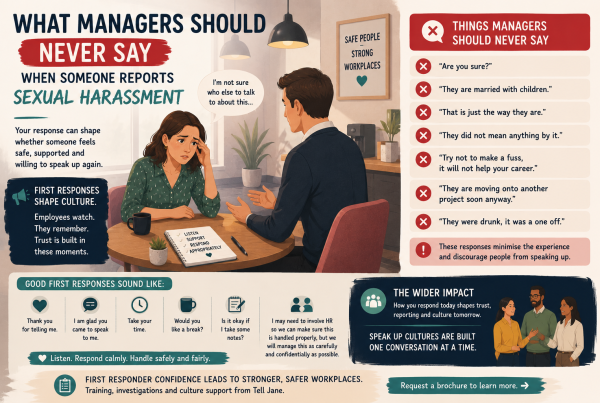
- Accessible reporting mechanisms: Ensure that employees know how to report sexual harassment and feel safe doing so, whether the incident occurs in the office or at a social event.
- Prompt and thorough investigations: Take all reports of sexual harassment seriously, investigate promptly, and take appropriate action regardless of where the incident occurred.
- Support for victims: Provide resources and support for those who experience sexual harassment, including counselling services and assistance with the reporting process.
By maintaining a clear distinction between professional and social interactions and fostering an environment of respect and accountability, employers can help prevent sexual harassment and ensure a safe and inclusive workplace for all employees.
Sexual harassment is a major contributor to a toxic workplace culture, and with the introduction of the Worker Protection Act, fulfilling your duty of care to your people is more vital than ever. Our Preventing Sexual Harassment in the Workplace training will help you understand the impact of sexual harassment and take proactive steps to prevent it.
Tell Jane offers a wealth of practical tips, guidance and training on preventing sexual harassment at work. Explore our range of webinars, in-person or online facilitation and e-learning options by emailing hello@telljane.co.uk for more details.
If you would like to implement an anonymous reporting service in your organisation and send a clear message that incidents will be taken seriously, please get in touch. The Tell Jane anonymous reporting hotline provides a safe platform for employees to voice their concerns without fear or reprisal.