Workplace investigations should always be a last resort. Whenever possible, it’s better to resolve issues through mediation or informal conversations. An investigation can be stressful for everyone involved, and if there’s a way to reach a fair outcome without escalating things, that should always be the first option.
That said, sometimes a workplace investigation is necessary. When serious allegations arise—like harassment, bullying, discrimination, or misconduct—it’s crucial to handle the process carefully, fairly, and in a way that protects everyone involved. A poorly managed investigation can do more harm than good, damaging trust, exposing the organisation to legal risks, and even making the situation worse. So, how do you ensure your approach is both fair and effective?
When is a workplace investigation necessary?
Not every workplace issue requires an investigation. In many cases, things can be resolved with a simple conversation, clear guidance, or mediation. But if the issue is serious, involves a potential breach of company policy or employment law, or poses a risk to employee wellbeing, a formal investigation may be the best course of action. It’s also important when informal attempts to resolve things have already failed.
The key is to assess the situation properly before launching straight into an investigation. If there’s a way to handle things in a less adversarial way, that’s usually the better approach.
Setting up a fair and transparent process
If an investigation is necessary, it needs to be structured, consistent, and transparent. Employees should know what to expect, and there should be clear policies in place to guide the process. Without this, people may feel confused, anxious, or distrustful about how their concerns are being handled.
Choosing the right investigator is crucial. Whether it’s an internal HR professional, a senior leader, or an external specialist, they must be completely impartial and have the right experience to handle sensitive situations. Transparency is just as important. Those involved need to understand their rights, what the process involves, and how their information will be handled. The more open and clear you are from the outset, the less stressful the process will feel.
Gathering evidence and conducting interviews
A workplace investigation is only as strong as the evidence gathered. That means taking the time to speak to the right people, ask the right questions, and document everything properly.
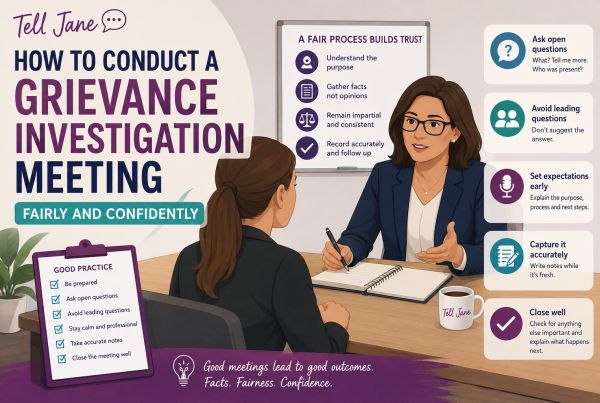
Interviews should be approached with care. The complainant, respondent, and any relevant witnesses need to be given the chance to share their perspective without feeling pressured. The way questions are asked makes a huge difference. They should be open-ended, non-leading, and focused on getting a clear, factual picture of what happened.
Confidentiality is absolutely key at this stage. People need to feel safe to speak honestly, without worrying about repercussions.
Making findings and taking action
Once all the evidence has been reviewed, the investigator needs to reach a conclusion. Was the complaint upheld? Partially upheld? Not upheld? Whatever the outcome, it’s essential that the decision is based on facts, not assumptions.
If misconduct has taken place, the next step is deciding what action should be taken. This could be anything from additional training or mediation to formal disciplinary measures, depending on the severity of the issue. What matters is that the response is fair, proportionate, and in line with company policies.
Communicating the findings properly is just as important as the decision itself. Everyone involved should understand the outcome and what it means for them, whether or not they agree with it.
Learning from the process
A workplace investigation shouldn’t just be about resolving a single incident—it’s also a chance to improve workplace culture. Take the time to reflect. Were there gaps in company policies or training that contributed to the issue? How can similar situations be prevented in the future? Are there any lessons that can be shared (while maintaining confidentiality) to help strengthen team relationships?
Handling workplace issues fairly and transparently isn’t just about ticking a box—it’s about creating an environment where people feel safe, heard, and supported. A well-managed investigation can help rebuild trust, but a proactive approach to workplace culture can prevent many issues from escalating in the first place.
Final thoughts
Workplace investigations should never be rushed into, but when they are necessary, they need to be handled fairly, sensitively, and professionally. A good process isn’t just about compliance—it’s about maintaining trust and integrity in the workplace.
If you need support with workplace investigations, Tell Jane is here to help. Whether it’s expert advice, independent investigations, or mediation services, we can guide you through the process to ensure a fair and ethical outcome.
Need guidance? Get in touch today.