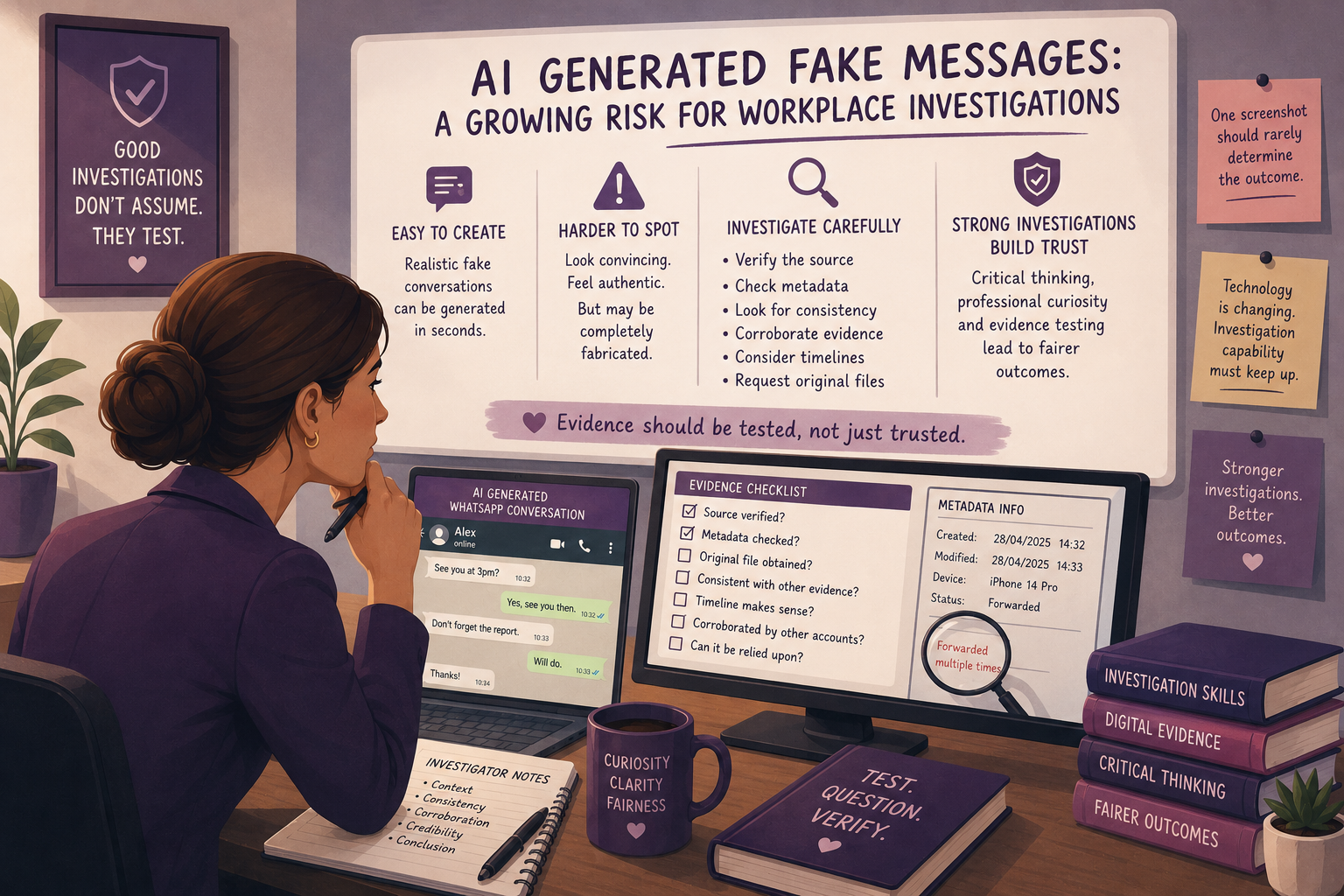
I recently created a fake WhatsApp conversation using AI in a matter of seconds.
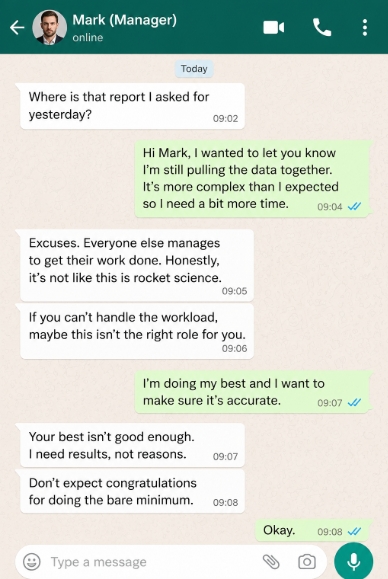
It looked realistic.
The formatting was convincing.
And at first glance, it looked entirely genuine.
The problem was that it was completely fabricated.
That should concern anyone involved in workplace investigations, employee relations, or HR.
Used responsibly, AI has huge potential benefits in the workplace. It can support productivity, learning, communication, and even parts of investigation administration. But when misused, tools like this create very real risks around fabricated evidence and misplaced confidence in what appears convincing on the surface.
And the reality is this technology is moving far faster than many workplace investigation processes.
For years, screenshots have played a significant role in investigations. WhatsApp messages, Teams chats, emails, Slack conversations, and social media posts are now regularly presented as evidence in grievance investigations, disciplinary investigations, and harassment complaints.
But a screenshot alone is no longer enough.
Investigators need to become increasingly careful about how digital evidence is assessed, tested, and verified.
The risk is not just sophisticated fraud or highly technical manipulation. The worrying part is how easy and accessible this technology has become. Someone with no technical background can now create fake conversations, manipulated images, and altered communications in minutes.
That creates obvious challenges for workplace investigations.
But there is another risk too.
It is not only fake evidence being created deliberately. It is investigators, managers, and organisations placing too much trust in evidence simply because it looks believable.
In emotionally charged situations, there is often pressure to reach conclusions quickly. Screenshots can feel persuasive because they appear visual and concrete. But good investigations have never been about accepting evidence at face value.
They are about testing it properly.
That means investigators increasingly need to think about:
- authenticity
- metadata
- source verification
- corroborating evidence
- timelines
- consistency of accounts
- original files rather than forwarded screenshots
- whether evidence can genuinely be relied upon
One screenshot should rarely determine the outcome of a complex workplace investigation on its own.
This is where skilled investigation practice becomes even more important.
Good investigators rely on careful questioning, evidence testing, professional curiosity, and critical thinking. They look for consistency across accounts. They explore gaps, context, timing, and supporting information. They avoid jumping to conclusions too quickly simply because something appears convincing.
At the same time, organisations need to avoid swinging too far in the other direction.
The answer is not to automatically distrust digital evidence or dismiss concerns because AI exists. Most employees who raise concerns are doing so genuinely and in good faith.
The answer is stronger investigations.
That means ensuring investigators are properly trained to assess evidence carefully and fairly in a world where technology is changing rapidly.
It may also mean organisations reviewing:
- investigation training
- evidence handling practices
- digital evidence policies
- record keeping processes
- investigator capability
Because this issue is not going away.
If anything, AI generated evidence is likely to become more sophisticated, more accessible, and harder to identify over the next few years.
Good investigations have always depended on critical thinking rather than assumptions. AI simply raises the importance of that even further.
Technology is changing quickly. Investigation capability needs to keep pace.
At Tell Jane, we support organisations with workplace investigations, investigator training, and speak up culture support to help leaders manage increasingly complex workplace concerns fairly and confidently. Request a brochure to learn more about our work.