Dealing with sexual harassment complaints is never easy. It’s sensitive, complex, and requires a well-considered, empathetic response. As an HR professional, you are the first point of contact, and how you handle these complaints can significantly impact the outcome—for both the complainant and the wider organisation.
Unfortunately, in my experience, things often go wrong at the first response stage. This is when issues like victim-blaming or well-meaning but misguided comments tend to arise. These responses, while often unintentional, can discourage the complainant from pursuing the matter further. It’s crucial to get this first response right, and the best way to do that is by training managers and leaders on how to respond. A single off-hand comment can undo weeks, if not months, of progress in creating a safe and respectful workplace.
1. The first response: Get it right from the start
How your team responds to a sexual harassment complaint at the very beginning sets the tone for everything that follows. It’s tempting to jump into “problem-solving mode” right away, but that’s not what’s needed. Acknowledging the complainant’s experience without any immediate judgment or assumptions is critical.
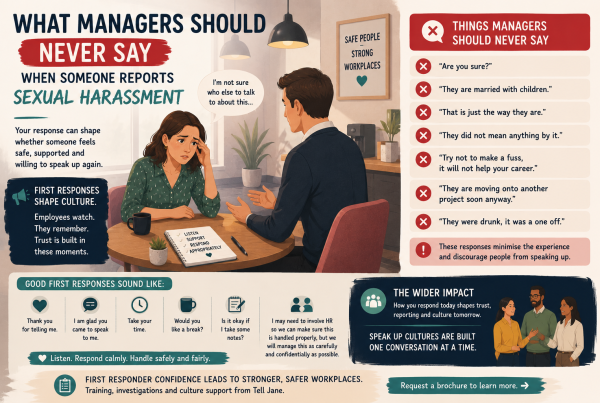
Some comments I’ve heard over the years that should never be said include:
- “Are you sure you want to make this complaint? They’re married.”
- “They have children, you know…”
- “Were you drinking when this happened?”
- “This could backfire on you. Have you thought this through?”
- “That’s just the way they are. Just ignore it.”
These comments can undermine the seriousness of the complaint and, worse, blame the victim. You might know not to say these things, but can you honestly say that all your leaders and managers understand the proper way to handle such sensitive issues?
If not, first response training should be a priority for your organisation. Leaders must know how to acknowledge complaints without bias, provide support, and avoid unintentionally discouraging the complainant. Everyone involved needs to feel heard and respected, right from the very start.
2. Understanding the spectrum of behaviours
Sexual harassment doesn’t always involve explicit or criminal behaviour. Inappropriate comments, jokes, or gestures may not necessarily warrant an immediate formal grievance investigation. However, this doesn’t mean they should be dismissed.
Sometimes, a quiet word with the individual making inappropriate comments can resolve the situation, especially if it’s a one-off incident or something minor in nature. Early intervention is key in these situations, and often, a straightforward, private conversation can stop the behaviour from escalating.
However, if the behaviour is persistent, targeting vulnerable employees, or abusing power (such as using sexual jokes to make junior employees feel uncomfortable), a more serious response is needed. In these cases, where the individual has been warned but continues the behaviour, it is crucial that you take stronger action. This could involve a formal investigation and potential disciplinary action. The key here is consistency in how responses are applied—one rule for one, one rule for all.
3. Matching the response to the situation
It’s important to assess each situation on its own merits, keeping in mind that the severity of the response should match the severity of the complaint. Here’s an example of how responses could differ:
- Inappropriate joke: A single off-hand sexual joke might require an immediate, informal response. A quiet word with the individual to remind them of appropriate behaviour may suffice, especially if it’s a first offence.
- Persistent behaviour: However, if the person has been warned before, continues to make inappropriate jokes or comments, and is making others uncomfortable, a formal investigation may be required. The response should escalate in line with the severity of the behaviour.
The key here is consistency. Don’t be tempted to treat people differently based on their status, seniority, or popularity. Everyone must be held to the same standards, or you risk undermining the whole process.
4. Dealing with time delays in serious complaints
One area HR professionals need to be particularly aware of is the time delay between the incident and the complaint being raised. It’s not unusual for victims of sexual harassment to feel traumatised, and it may take time before they feel ready to come forward. It’s important to acknowledge that just because a complaint is being made some time after the incident, it doesn’t mean it should be ignored.
In fact, in some cases, particularly where criminal behaviour such as assault is involved, the delay may be due to trauma or fear of retaliation. Regardless of when the complaint is made, the response should be thorough and taken seriously. Don’t dismiss the complaint simply because of timing.
5. Conducting a grievance investigation
If the situation escalates to a formal grievance, handling the investigation properly is crucial. The investigator needs to be impartial, well-trained, and knowledgeable about sexual harassment law and procedures. They should create a safe space for the complainant to voice their concerns without fear of retaliation or victimisation.
It’s essential to communicate clearly with all parties involved and maintain a sense of confidentiality throughout the process. The complainant should feel supported, and they need to know that their concerns are being taken seriously.
The investigator’s role is not just to find out “what happened” but to ensure that everyone involved has been treated fairly and with respect. A good investigator will also know how to make the process as smooth as possible for the complainant, recognising that coming forward is often difficult.
6. Encouraging reporting and welcoming complaints
It may sound counter-intuitive, but HR must welcome complaints. Encouraging employees to speak up about harassment is vital for maintaining a safe and healthy workplace culture. By creating an environment where complaints are heard and addressed properly, you send the message that sexual harassment will not be tolerated.
The process should be transparent, with clear policies that outline exactly how complaints will be handled, who to speak to, and what steps will be taken next. If employees feel supported, they are much more likely to report issues before they escalate.
7. Key takeaways
When it comes to handling sexual harassment complaints as an HR manager, your approach should be:
- Fair, consistent, and thorough.
- Aimed at supporting the complainant while addressing the issue fairly and professionally.
- Sensitive to the nuances of each individual case, with responses that match the severity of the behaviour.
- Focused on training leaders and managers on the first response to ensure they handle complaints appropriately from the outset.
At the end of the day, your role as an HR professional is to ensure that all employees feel safe, respected, and heard. By taking a proactive and empathetic approach to sexual harassment complaints, you’ll help create a workplace where harassment isn’t tolerated and where people feel comfortable speaking up.
Need help handling a sexual harassment complaint or training your team?
At Tell Jane, we specialise in providing expert support and training to ensure your workplace remains safe and respectful for everyone. If you’re looking for guidance or assistance, don’t hesitate to reach out. We’re here to help.