When someone reports sexual harassment at work, the first response matters more than many managers realise.
Not because managers are expected to have all the answers in the moment, but because the way someone responds can shape whether the individual feels safe, supported, and willing to continue engaging with the process.
Most people do not report sexual harassment lightly. By the time someone decides to speak up, they have often already spent a long time questioning themselves, worrying about consequences, and debating whether it is worth saying anything at all.
That means the first conversation carries a lot of weight.
Unfortunately, this is also where organisations often get it wrong.
Sometimes managers panic and try to minimise the situation because they want to calm things down quickly. Sometimes they become defensive, uncomfortable, or overly focused on protecting the team dynamic. Sometimes they say things they think are reassuring, but which actually discourage the person from speaking up further.
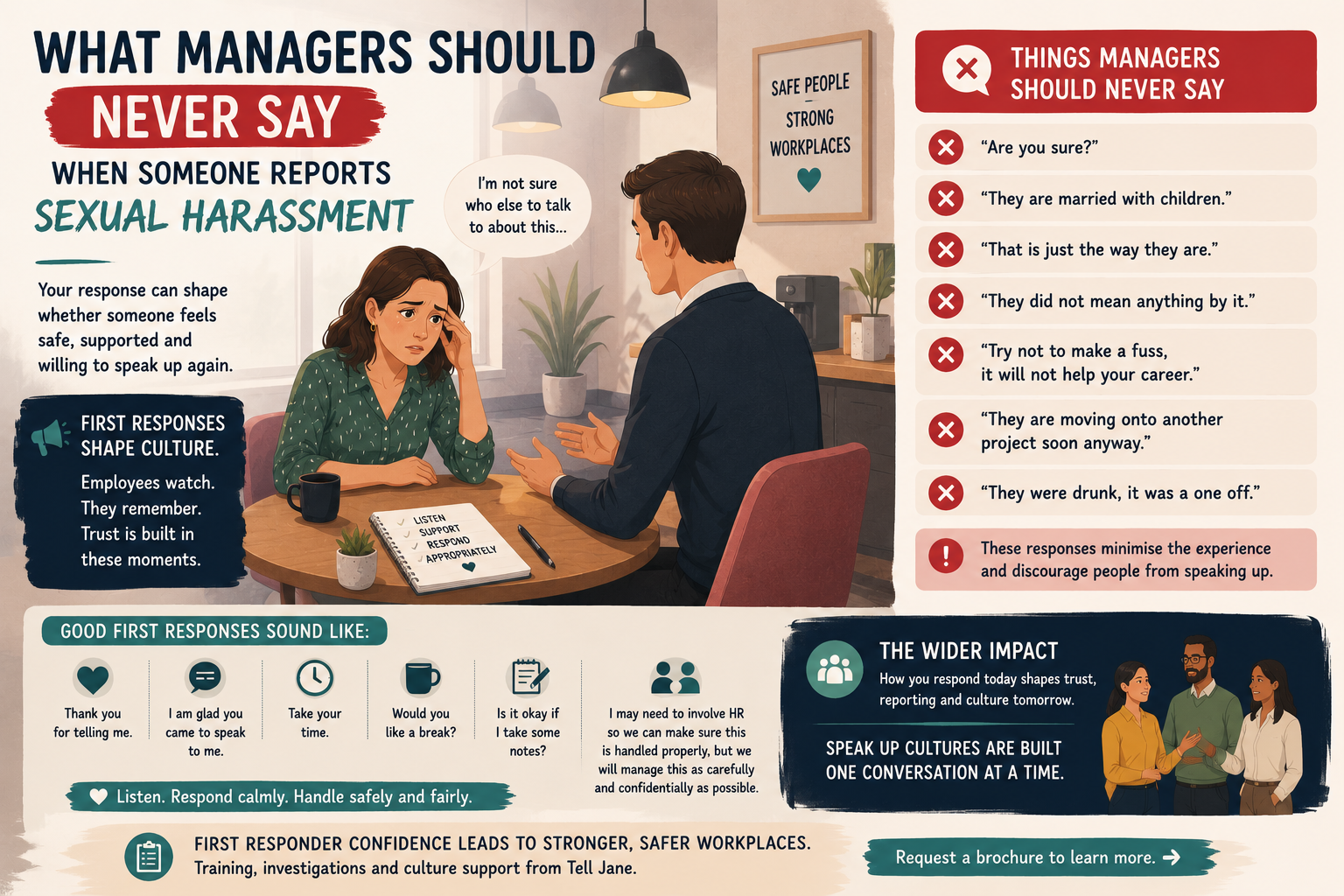
Comments like:
“Are you sure?”
“They are married with children.”
“That is just the way they are.”
“They did not mean anything by it.”
“Try not to make a fuss, it will not help your career.”
“They are moving onto another project soon anyway.”
“They were drunk, it was a one off.”
These types of responses can immediately damage trust. Not because the manager intended harm, but because the focus shifts away from the individual’s experience and onto protecting the situation from becoming uncomfortable.
Another common mistake is trying to solve or investigate the issue immediately.
Managers often start asking too many questions, testing evidence, or trying to decide whether the behaviour was serious enough there and then. Others promise complete confidentiality without properly explaining what may need to happen next.
Sometimes managers become very empathetic and supportive in the moment but then quietly do nothing because they are trying to avoid escalation or protect the person from stress.
But confidentiality should never become an excuse for inaction.
Employees need clarity about how information will be handled, who may need to know, and what the next steps are likely to look like.
The role of the first responder is not to investigate or fix the issue in the moment.
It is to listen properly, respond calmly, and make sure the concern is handled safely and fairly from that point onwards.
In practice, good first responses are often quite simple.
They sound like:
“Thank you for telling me.”
“I am glad you came to speak to me.”
“Take your time.”
“Would you like a break?”
“Is it okay if I take some notes?”
“I may need to involve HR so we can make sure this is handled properly, but we will manage this as carefully and confidentially as possible.”
Managers do not need perfect wording. What matters most is that the individual feels heard, taken seriously, and reassured that the organisation is willing to respond appropriately.
And the wider impact of these moments should not be underestimated.
Employees watch how concerns are handled. They notice whether leaders minimise difficult conversations or address them calmly and fairly. Over time, these moments shape trust in leadership and confidence in the organisation’s culture far more than policies or awareness campaigns ever will.
Speak up cultures are built in these conversations.
That is why first responder training matters so much. Organisations cannot assume managers instinctively know how to handle disclosures well, especially when the conversation feels emotionally charged or high stakes.
At Tell Jane, we help organisations build confident first responders, stronger speak up cultures, and safer workplace environments through training, investigations, and culture support. Request a brochure to learn more about our work.