For the past seven years, since founding Tell Jane, we’ve partnered with companies across the UK to shift their approach to handling sexual harassment—from reacting to incidents to truly prioritising prevention. We’re fortunate to work with organisations committed to building respectful, inclusive cultures, and yet all too often, companies still reach out only after an incident has already affected employee trust, morale, or reputation.
Now, with the Workers Protection Act, we’re seeing a surge in interest from companies wanting to ensure compliance with the latest requirements for employee safety and protection. But this raises a question we’ve asked for years: Why does it take new legislation to make the right thing a priority?
Why prevention is often reactive—but shouldn’t be
In my experience, many companies tend to handle harassment reactively, acting only once an incident brings the issue to the forefront. It’s understandable—complex organisations face competing priorities, and often the absence of an issue can create a false sense of security. But prevention is the more effective approach. Data and experience both tell us that proactive steps like clear policies, ongoing training, and building a culture of open communication make an enormous difference in preventing issues before they start.
We’re grateful to the forward-thinking organisations who’ve already committed to these proactive measures and have been working with us over the years to create safer environments. By prioritising prevention, they set a positive example that goes beyond simply meeting compliance requirements.
The Workers Protection Act: a new standard, but will it have an impact?
With the introduction of the Workers Protection Act, employers are now legally required to implement proactive measures against workplace harassment, including regular training, clear reporting processes, and updated policies on harassment prevention. This legislation has increased demand for our services as organisations seek to meet these new standards. But as much as we welcome the positive intent behind the Act, we’re also watching closely to see if these legal changes bring genuine, measurable improvements.
If the statistics from the years since #MeToo tell us anything, it’s that awareness alone hasn’t reduced incidents of workplace harassment. Simply implementing a policy or one-time training isn’t enough—real change requires a shift in culture and leadership commitment. The Workers Protection Act is an important step, but it’s one of many necessary actions for achieving meaningful impact.
Essential steps for creating a respectful workplace culture
Creating a genuinely respectful workplace is about taking proactive steps that establish clear expectations for behaviour and reinforce a positive culture. Here are a few ways organisations can make this a priority, whether or not required by law:
- Create accessible, clear policies: Employees need to understand their rights and what constitutes unacceptable behaviour. Up-to-date policies that define harassment, explain reporting channels, and outline consequences lay a strong foundation.
- Make training regular and inclusive: Training on respectful conduct shouldn’t be a one-off tick-box exercise. Continuous, scenario-based training reinforces understanding and gives employees and managers practical tools for addressing concerns.
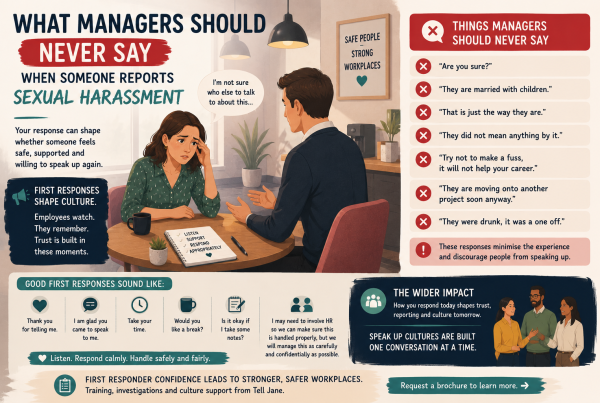
- Foster a speak-up culture: Encourage open communication. Employees should feel safe reporting issues without fear of retaliation, and managers should be equipped to handle complaints with sensitivity and respect.
- Lead by example: Leaders set the tone. A culture of respect and prevention starts from the top. When leaders model these behaviours, it sends a powerful message to the whole organisation.
- Regularly review and adapt policies: Prevention is an ongoing effort. Routinely reviewing and updating policies and procedures shows a commitment to employee well-being and helps organisations stay prepared.
Broadening the scope: tackling all forms of harmful behaviour
While sexual harassment remains a critical issue, it’s only one aspect of what makes a respectful and inclusive workplace. Many forms of unacceptable behaviour—such as sexism, racism, homophobia, ableism, and bullying—demand attention. As we help organisations navigate the new legal requirements, we’re also encouraging them to take a broader view, creating policies and practices that address all kinds of harmful conduct.
To all the companies that have partnered with us over the years, thank you for helping us work toward a more inclusive, respectful workplace culture. You’re leading the way in making positive change, and we’re proud to be part of that journey. For those joining us now, we’re here to support you in implementing robust, proactive measures that go beyond compliance to create a truly safe environment.
The Workers Protection Act may finally provide the legal impetus for companies to take harassment prevention seriously, but lasting impact comes from a deeper commitment. If the #MeToo movement showed us anything, it’s that laws and awareness alone aren’t enough to change workplace culture—prevention must be a priority, ingrained at every level.
Expanding efforts to address all forms of harmful behaviour, including harassment, discrimination, and bullying, will help create workplaces where everyone feels valued and safe. This is about more than compliance; it’s about doing what’s right for employees and for the future of workplace culture.
If you’re ready to create this change—whether as a long-time partner or a new ally—let’s work together to make a lasting impact.
Tell Jane can provide further practical tips, guidance and training on preventing sexual harassment at work and the Tell Jane anonymous reporting hotline provides a safe platform for employees to voice their concerns without fear or reprisal.
Reach out for our latest ‘Prevention of Sexual Harassment at Work – Policy Template’ for businesses to customise and apply within their workplace.
Email hello@telljane.co.uk to discover more – we’d love to chat.