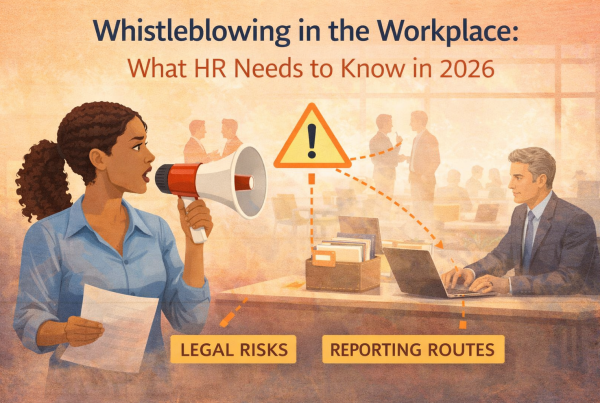
With the recent introduction of sexual harassment prevention in the UK, employers are now required to proactively address this critical issue. For HR professionals, it’s essential to understand that an effective sexual harassment risk assessment isn’t just a box-ticking exercise. It involves identifying potential risks, addressing power dynamics, and understanding how professional boundaries can blur, particularly in social situations.
This blog will guide you through actionable strategies for conducting a comprehensive sexual harassment risk assessment that addresses real workplace challenges.
Mapping “grey areas”
Sexual harassment can often occur in informal or less supervised settings where professional boundaries are blurred. Whether it’s the break room, social events, or even virtual platforms like Zoom, these environments can be hotspots for inappropriate behaviour.
Action: As part of your sexual harassment risk assessment, map out these “grey areas” where social and work interactions intersect. Establish clear guidelines for behaviour in informal spaces, and ensure that employees know harassment policies apply beyond the physical office.
Evaluating informal reporting channels
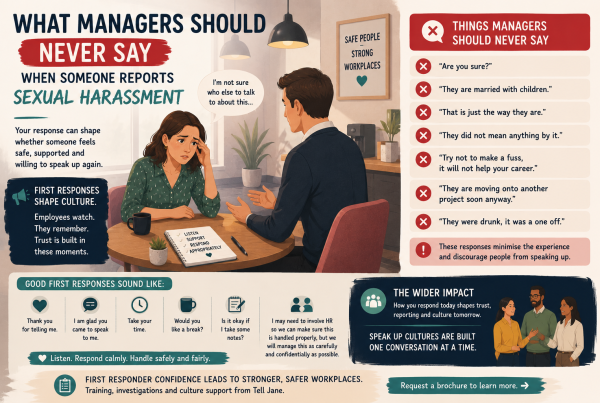
Employees often prefer informal reporting channels, confiding in colleagues or managers before filing a formal complaint. However, if these concerns are not addressed appropriately, harassment can persist.
Action: When conducting your sexual harassment risk assessment, evaluate the effectiveness of informal reporting methods. Are employees comfortable raising concerns? Train managers to escalate informal reports and ensure every issue is documented and followed up.
Analysing department-specific risks
Different departments have unique risks. Client-facing roles, for example, may expose staff to more frequent external interactions where inappropriate behaviour could occur, particularly during travel or off-site meetings.
Action: Tailor your sexual harassment risk assessment to each department’s specific challenges. Implement prevention strategies such as additional training for roles that involve frequent external client interaction. Identify any vulnerabilities specific to certain teams or roles and address them.
Assessing digital communication platforms
With the shift to remote and hybrid working, digital communication platforms have become common spaces for interaction—but they can also be used inappropriately. Harassment through emails, instant messaging, or even virtual meetings can be harder to detect.
Action: Make sure your sexual harassment risk assessment covers virtual interactions. Review how messaging apps, emails, and video calls are used in your organisation. Ensure that policies are clear about expected behaviour in virtual spaces and train staff accordingly.
Spotting “Over-Friendly” behaviour that masks harassment
In some workplaces, seemingly friendly behaviour can cross the line into harassment. Persistent banter, sexual jokes, or unwelcome comments on appearance may be dismissed as harmless, but they contribute to a hostile work environment.
Action: Identify these subtle behaviours during your sexual harassment risk assessment. Train employees to understand that over-familiar or inappropriate actions—no matter how “harmless” they seem—can have serious consequences. Encourage staff to speak up if they witness or experience discomfort.
Power discrepancy hotspots
Power dynamics play a significant role in sexual harassment cases. Junior employees, interns, or temporary staff may feel particularly vulnerable, especially when interactions involve more senior staff or clients. These power imbalances can prevent employees from speaking out.
Action: Your sexual harassment risk assessment should include an evaluation of power imbalances within the organisation. Establish clear boundaries for mentorship or supervision relationships, and ensure junior staff have access to safe reporting channels. Protect vulnerable employees from situations where their career may feel at risk if they speak up.
Targeting appropriate prevention measures based on risk profile
After conducting your sexual harassment risk assessment, you’ll likely identify specific areas where the risk of harassment is higher. Different departments, roles, or situations will require tailored prevention measures.
Action: Use your findings to implement specific prevention strategies based on the risk profile of each team or role. For example, if your assessment highlights issues in client-facing roles, provide targeted training on managing difficult interactions with external parties. Customising your approach ensures more effective risk management.
Subtle signals in employee surveys
Employee surveys can be a valuable tool in your sexual harassment risk assessment, but generic questions often miss subtle warning signs. Employees may downplay their experiences, particularly if they’re unsure how to define or report inappropriate behaviour.
Action: Craft your surveys carefully. Instead of asking broad questions, include those that seek out subtler signals of discomfort. For example, ask whether employees have witnessed behaviour that made them feel uneasy or whether they’ve been hesitant to report certain interactions. Use the data to identify cultural or systemic issues.
Evaluating training effectiveness through real-world scenarios
Sexual harassment training is often too theoretical, leaving employees unsure how to handle real-life situations. Effective training should equip employees with practical skills for identifying and responding to harassment.
Action: Test your training’s effectiveness as part of your sexual harassment risk assessment. Use real-world scenarios that employees are likely to encounter in their roles. If staff struggle to apply what they’ve learned, adjust the training to focus more on practical responses that align with your workplace culture.
Navigating the blurred line between work and social settings
Work and social life often overlap, particularly during after-hours gatherings, company outings, or team-building events. These social situations can blur professional boundaries, increasing the risk of inappropriate behaviour.
Action: Your sexual harassment risk assessment should account for work-related social events. Make sure employees know that workplace policies extend to these settings, and that harassment will not be tolerated even in informal or social contexts. Encourage managers to set the tone and lead by example during these events.
Proactive risk management to create a safer workplace
Conducting an effective sexual harassment risk assessment is essential for any organisation committed to providing a safe and respectful working environment. By focusing on grey areas, power dynamics, and social settings where boundaries are more likely to blur, HR professionals can develop a proactive strategy that truly addresses risks before they escalate.
Remember, a comprehensive sexual harassment risk assessment is not only about compliance—it’s about protecting your people and fostering a culture of respect.
Tell Jane offers a wealth of practical tips, guidance and training to help prevent sexual harassment at work. Explore our range of webinars, in-person or online facilitation and e-learning options by emailing hello@telljane.co.uk for more details.