If you work in HR, you’ve probably been there.
The grievance lands. It’s formal, it’s serious, and it usually hasn’t come out of nowhere. Something’s been brewing. Maybe for weeks. Maybe for years. And now, it’s exploded into a full-blown issue that needs investigating.
It takes time. It drains energy. And often, by the time you get to resolution, relationships are beyond repair.
That’s why the smartest HR teams are shifting gears. Not just responding to problems but getting ahead of them.
What’s the actual cost of being reactive?
Let’s look at the numbers.
🔹 Over 45,000 employment tribunals are currently open in the UK
🔹 Discrimination claims rose by 15% last quarter
🔹 Disability-related claims jumped by 28%
(Source: Peninsula)
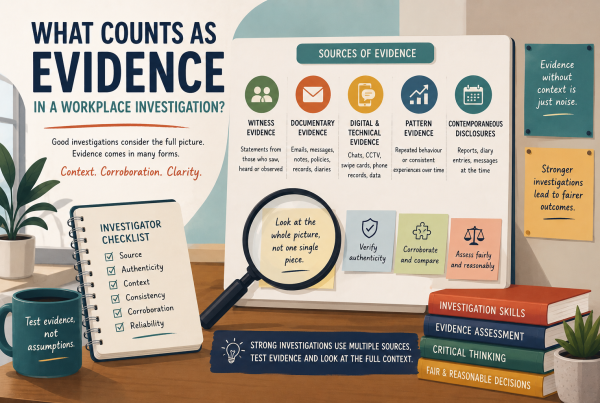
And many organisations still aren’t tracking the data that matters:
Only 51% track whether employee issues were substantiated
Just 30% monitor the type of issue
(Source: HR Acuity Employee Relations Benchmark Study)
That’s a problem. You can’t fix what you’re not measuring. And you can’t prevent what you don’t understand.
So what should HR be doing instead?
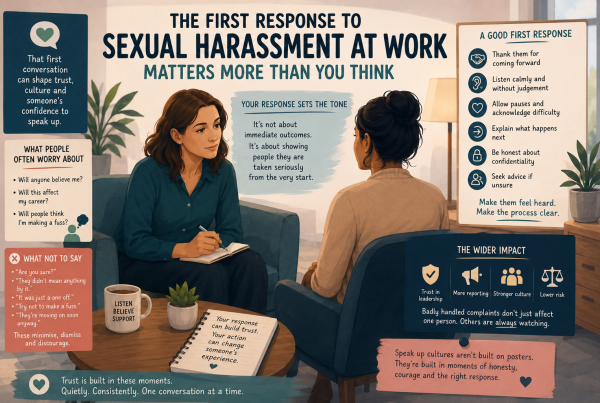
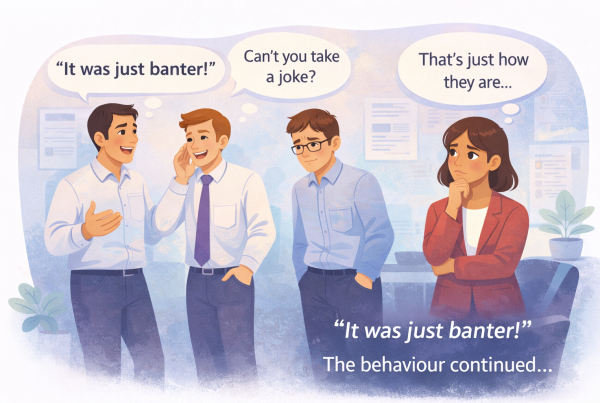
Start where things go quiet. The low level complaints. The early signs that something’s off. The comment someone made didn’t feel right. The pattern of exclusions. The silence in a meeting.
This is where prevention starts. Not with policy, but with culture.
And HR plays a critical role. Not as the grievance handler, but as the enabler. Giving managers the tools. Creating safe spaces to speak up. Building frameworks that help people act before it becomes formal.
Think:
1. Bystander training that gives people a voice
2. Clear behavioural expectations not just values on a wall
3. Coaching managers to have tricky conversations early
4. Training that addresses not just compliance, but culture
Don’t just resolve issues. Stop them from taking root.
This shift isn’t just about reducing grievances or the number of investigations. It’s about trust. Culture. Fairness. And it’s about not letting things spiral to the point where formal processes are the only option.
It’s also what we help clients do every day at Tell Jane.
Because no one ever said, “I wish we’d waited longer to deal with that.”
Tell Jane can provide further practical tips, guidance and training on preventing conflict before it arises. The Tell Jane anonymous reporting hotline also provides a safe platform for employees to voice their concerns without fear or reprisal. Email us today at hello@telljane.co.uk for further information.