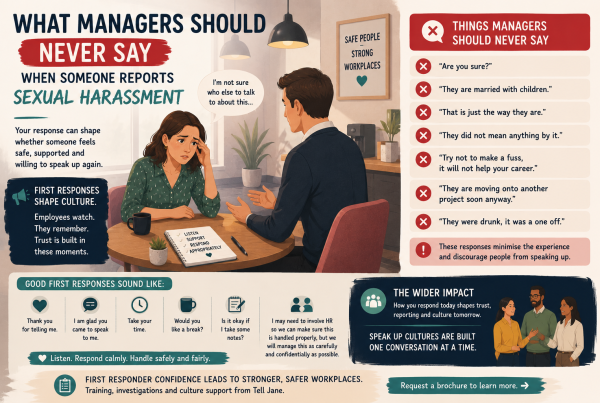
Having a well-defined sexual harassment policy is not just a legal necessity under the Equality Act 2010—it’s a cornerstone of fostering a safe and respectful work environment. In this blog, we explore why every workplace needs a robust sexual harassment policy and how it benefits both employees and employers.
Legal compliance: Meeting UK standards
The Equality Act 2010 requires employers to take reasonable steps to prevent harassment and discrimination. Failing to do so can result in costly legal claims and reputational damage.
A clear policy demonstrates an organisation’s commitment to:
- Complying with UK laws.
- Providing guidance to employees on acceptable behaviour.
- Outlining the consequences of violating workplace standards.
Protecting employees’ well-being
Sexual harassment has far-reaching consequences for those affected, including stress, anxiety, and decreased job satisfaction. A policy provides employees with the reassurance that:
- Their concerns will be taken seriously.
- They have clear channels to report incidents.
- Support systems are in place to address their needs.
Fostering a positive workplace culture
A workplace free from harassment is one where employees feel respected and valued. A comprehensive policy helps:
- Set the tone for respectful interactions.
- Hold individuals accountable for their actions.
- Create an inclusive environment that attracts and retains talent.
Providing clear procedures
Uncertainty around how to report harassment or what will happen after a complaint can deter employees from coming forward. A good policy provides:
- Clear definitions of sexual harassment.
- Step-by-step guidance on reporting procedures.
- Assurance of confidentiality and protection against retaliation.
Reducing organisational risk
Ignoring harassment can lead to legal claims, loss of productivity, and reputational harm. A sexual harassment policy helps mitigate these risks by:
- Demonstrating proactive measures to prevent harassment.
- Providing a framework for resolving issues promptly and fairly.
- Minimising the likelihood of costly tribunal claims.
Best practices for creating an effective policy
- Consult employees: Involve staff in the policy development process to ensure it addresses real concerns and builds trust.
- Define harassment clearly: Use examples to illustrate unacceptable behaviours, making the policy easy to understand.
- Outline reporting mechanisms: Provide multiple channels for reporting, including anonymous options.
- Commit to training: Regular training ensures employees and managers understand their responsibilities.
- Review regularly: Update the policy to reflect changes in legislation and workplace culture.
A sexual harassment policy is more than just a document—it’s a commitment to creating a safe and supportive workplace. Employers who take this seriously not only comply with legal obligations but also foster a culture of respect and inclusivity.
If your organisation needs assistance in drafting or reviewing a sexual harassment policy, our HR consultancy is here to help. Contact us today to ensure your workplace is equipped to address and prevent harassment effectively. You can email hello@telljane.co.uk for a brochure.